China updates

I’m still catching up on my China reading that I missed while I was in the U.S. Here are a few articles that stood out to me:

  • China’s Ethnic Song and Dance” in the Times, about China’s relationship with minorities: “Chinese officials like to paint a picture of China as one big happy multicultural family. To that end, the state pushes the stereotype that ethnic minorities are little more than entertainers who sing and dance in bright costumes.” The article goes goes on to describe how minorities are pushed into livelihoods based solely on their minority status. Indeed, state-sponsored galas of performances and skits often showcase minorities singing and dancing, all the while smiling so broadly, you think they’ve never been unhappy in their lives. In Anhui, Yunnan, Guilin and Sanya, I was taken to tourist sites that were models of traditional villages of the local area’s ethnic minority. Visiting one kind of feels like going to the zoo, where ethnic people mill around the mock village, doing their ethnic thing, against a backdrop of their native environment. Crowds of Han Chinese are shuffled by a tour guide from each “exhibit” to the next — one is of an old Miao lady weaving a pair of pants, another is a group of young men doing a dance, yet another is a young woman inviting you into her “house” to explain their marriage customs and clothing. At the end, you can buy their authentic ethnic goods: jewelry, snacks, ceremonial head gear, silver. To me, it seems kind of debasing, in the same way a zoo feels inhumane. While these tourist sites can be educational and help to preserve minority cultures that may otherwise be lost during assimilation, they are also remarkably superficial, a whitewashed tale of a happy, harmonious group of people with not a care in the world, to be gawked at — not joined — by their Han overlords. They are trophies, another sign of a great China, but they are not the Han’s equals. On the one hand, preferential policies make it seem as if minorities are at least recognized and treated well. On the other hand, the potential reasoning behind these preferential policies — to keep the minorities relatively content so that they don’t cause trouble — seem to negate any of the benefits that they receive, especially when coupled with the “go West” policies that encourage Han Chinese to settle in places that once were predominantly made up of minorities. I’m not criticizing China on this point (for now), as every Western culture has its own problems with how it treated (treats) immigrants and other native minorities, but I do think China still has substantial progress to make in this respect before it can be seen as a “great” country.
  •  “Will the Real CIETAC Please Stand Up?” from China Law Blog, an update of the ongoing drama involving China’s arbitration commission. If you haven’t been following it, essentially CIETAC passed new rules early last year that strengthened the power of its Beijing (base) office, at the expense of its other offices (known as sub-commissions) around the country. Two of them rebelled and declared their independence in May. Since then, the comedy of it all has just about overshadowed the real effects it has had on many companies’ business agreements:
  • The saga continued, with the situation going from bad to worse. On October 22, 2012, CIETAC South China changed its name to the South China International Economic and Trade Arbitration Commission, or SCIETAC, with its own set of arbitration rules that went into effect on December 1, 2012. Realizing that if one new name was good, then two new names must be better, SCIETAC also gave itself a second official name: the Shenzhen Court of International Arbitration (SCIA). Then on April 18, 2013, CIETAC Shanghai changed its name to the Shanghai International Arbitration Center (SHIAC), with its own set of arbitration rules that went into effect on May 1. Naturally they needed a second name as well, and what could be less confusing than the Shanghai International Economic and Trade Arbitration Commission (SIETAC)? Meanwhile, CIETAC Beijing opened up new offices in Shanghai and Shenzhen, using the same arbitration rules that SHIAC and SCIETAC had rejected.
  • 中国梦区别于美国梦的七大特征” from Caijing, on the seven ways the China Dream differs from the American Dream (besides the fact that China Dream refuses to go by English-accepted grammar rules): 1) The China Dream puts the wealth and power of the country as a whole ahead of individual prosperity; 2) The China Dream’s purpose is to revitalize the nationality of China, not the realization of individual success; 3) The China Dream must be achieved using only Chinese people, while the American Dream can be realized with other country’s talents and resources; 4) The China Dream is the harmony and happiness (幸福, xingfu) of the community, while the American Dream is freedom and happiness (快乐, kuaile) of each individual; 5) The China Dream seems like it has the stability and backing of historical depth (because China has 5,000 years worth of history); 6) The China Dream relies on the strength and policies of the community, while the American Dream is based on individuality; 7) The China Dream is for the honor and glory of the nationality, while the American Dream is for honor and glory of the individual. In a nutshell, the two dreams have different focuses — the collective versus the individual. In a larger nutshell, this is the difference between China and the U.S.

Weekend fun: Mushrooms

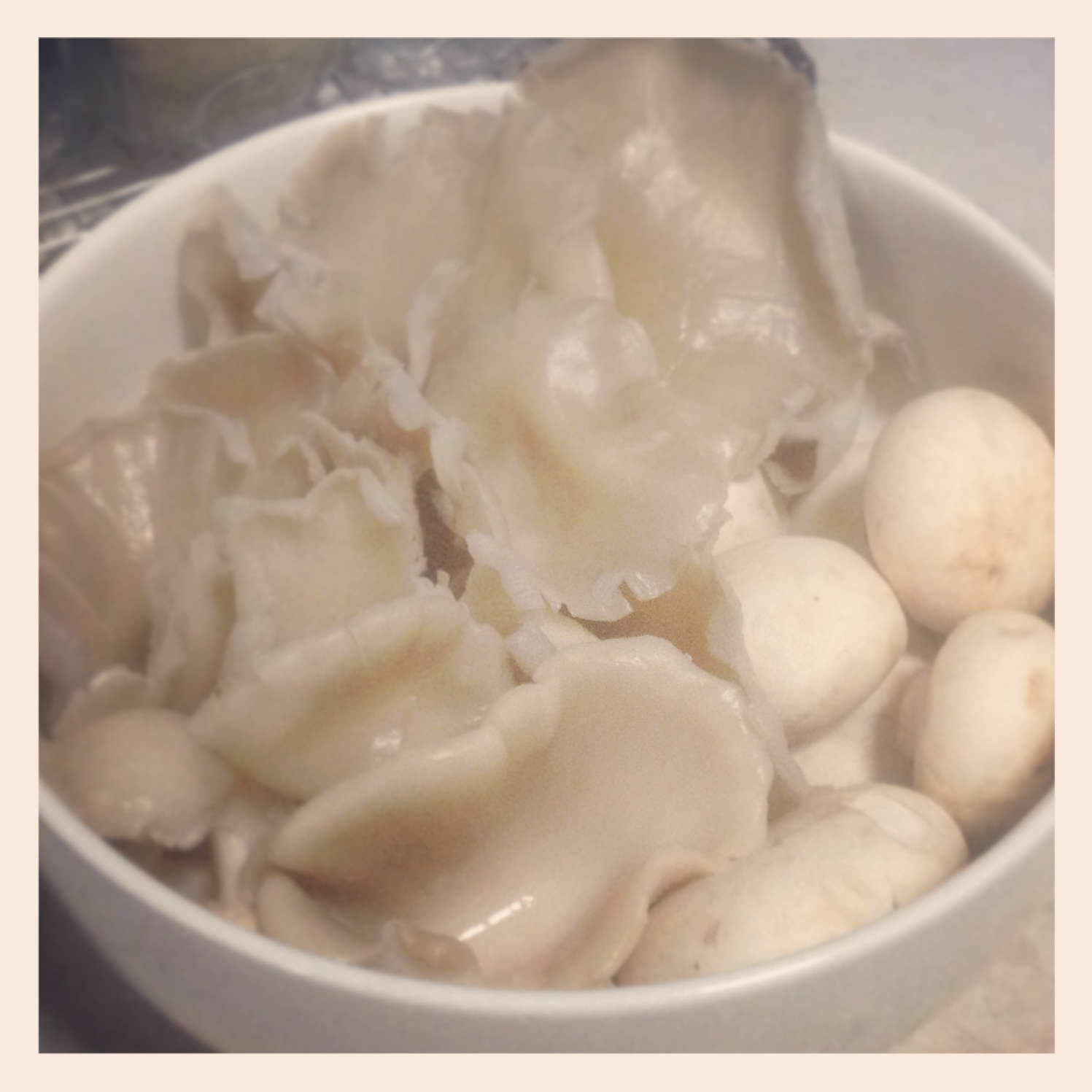
Boyfriend is on his own visa run for the next few weeks, so that can only mean one thing, besides soul-crushing loneliness: I CAN EAT ALL THE MUSHROOMS I WANT!

I love mushrooms. They should be in everything I eat. When they aren’t, I feel sad. Boyfriend can’t stand the sight of them, like I can’t stand the sight of bugs and spiders. He’s so scared of them, it’d be cute if it didn’t mean that I can’t bring them home to eat :( But now he’s gone, and I can! I went to the market today to buy all the different kinds of mushrooms in the world! But unfortunately the mushroom lady would only sell them by the jin, which is about a pound, and I couldn’t really justify buying a jin of all the different kinds of mushrooms (there were at least five). So I just bought two kinds, oyster mushrooms and button mushrooms.

Mmmushrooms.

I ended up getting about 3 jin of mushrooms for 13 kuai (about $2.15). I fully plan on going back for more mushrooms, and then I can make mushroom salads, mushroom pasta, mushroom and tofu sandwiches, mushroom everything! Button mushrooms are expensive in China, by the way. I don’t know why I bought them. They are so regular. I guess I’m still thinking about home.

Dispatches from the U.S., Part I

I wrote most of this post while I was in the U.S., waiting for my new visa. While I had an idea of what I wanted to say, it took a lot of reorganization and editing so that it wouldn’t just be rambling. It still is mostly rambling, but if my dad can read it, I hope he kind of can understand what I’m saying.

***

I usually write from China, where I live, but now I’m on the other side of the world (literally! The East Coast of the U.S. is 12 hours behind Beijing, at least during Daylight Savings). My dad is grilling me about my time in China — Why did I choose to go? What have I learned? What do I want to get out of it? Do I have any regrets about spending the last four years of my life there? — and I honestly don’t know what to say. Even though these are perfectly valid questions, and ones that I’m constantly reevaluating in my head, I have this defensive instinct to become annoyed when my dad is asking these kinds of introspective questions and I just get really choked up, so in the end I always have to find a way to dodge the question or eke out some kind of non-answer. I don’t mean to, but I really don’t know what to say. I have somewhat of an idea of my real answers, but they’re so complex and, for some reason, really overwhelming.

The truth is, I landed in China four years ago almost to the day, right after I’d graduated, without any clue what to expect. I had next to no experience with the real world, and I had really next to no interest in China. I mean, I would keep up with it in the news, and I felt like I had a somewhat better idea than all the Western reporters reporting on it of what China was about and where it was coming from, even though I’d only been once, on a whirlwind tour. But by virtue of being Chinese-American and growing up in a (not even particularly) Chinese family, I could sense deep down an understanding, even if I couldn’t articulate it, of what it was that seemed to confuse so many about China. And to be honest, I still feel that way. But did I ever look to China and think, “Wow, China, you are so fascinating!”? Not really! I only took Mandarin courses as an elective (which maybe shows some of my interest), and I tried to take Asian Politics, but that was always full or didn’t fit my schedule. I was not what you’d call a China hand or a China watcher.

To be fair, up until that point, international travel was like a pipe dream. I wanted so badly to study abroad during college, but it was expensive and kind of a hassle. So it was no wonder that I never considered working abroad — that is, until it was the second semester of senior year, and I had no idea what to do after graduation. None of the job prospects in front of me seemed exciting at all, and I just knew I didn’t have it in me to start as a small town reporter. When the J-school posted an opportunity for a summer internship in China, I ignored it at first, like I had learned to do for all things abroad. But when I saw the posting about the looming deadline for applications, something just clicked. I knew it was mine if I wanted it. And I wanted it. And I got it. And three months later, I left for China.

In a lot of ways, I am lucky that I landed in China. I know that I would’ve enjoyed just about any place I landed in, had I found some other job in another country, but it’s hard to imagine that I would have stayed as long as I have in China or found it as fascinating. What was supposed to be a three-month summer fling turned into a four-years-and-counting serious relationship. While the reason I haven’t left is a mixture of feasibility (I’m looking at you, lack of jobs) and stasis (I’ve become quite comfortable here), the main reason I choose to stay is that I like it too damn much. Now that I’ve traveled to more places, I know that I feel a connection with China that isn’t there when I visit other countries. It helps that I’m Chinese-American, but I think the connection is really important to helping me see and understand what’s going on around me.

Being back in the U.S., and seeing how things are still about as I left them, I just know that I’m not really missing out on much. I know the U.S. well enough because I was born and raised there. It would take another lifetime to uncover all of China’s secrets, but that’s not really my intent. I don’t think I’m learning anything life-changing — actually, I guess many things about China have changed me, but none of them were necessary. So I guess this experience in China isn’t exactly necessary, for me or for anyone else in the world, which kind of trivializes it in a way that upsets me. Because I wouldn’t trade it for a cushy, high-paying, career-focused job in the U.S. or a law degree or any other tangible achievements that I would like to have but don’t because I’ve been screwing around in China. It is, however, my goal now to turn this intangible experience into something worthwhile for others. It would be amazing for me if I could use what I’ve learned these past four years in the future; it’d be a waste not to. I don’t mean that the past four years would be a waste personally, but that it could be useful and so not using it would be a waste. But whether anyone will have any use for this alleged “deeper understanding of another (not just any other, but a pretty powerful) country and culture” is a very open question.

What happened in May

What a month. It started off with a friend’s wedding, then quickly followed with visits from friends and relatives, an excursion out west, and finally an impromptu — but welcomed — visa run to the U.S. (while friends and relatives were still visiting.)

With that said, this post is simply a placeholder of sorts for forthcoming entries on:

  • Gansu
  • What I did in the U.S. (conversations with my father and friends about China)
  • Reverse culture shock
  • Visa troubles, the new Entry-Exit Law, and the cause of my sudden departure from China

Obviously there are a bunch of things I want to write about, but unfortunately, no guarantees that I’ll ever get around to writing about them in a timely manner. Especially since it’s already mid-June and I’m still kind of battling jet lag.

The si gua

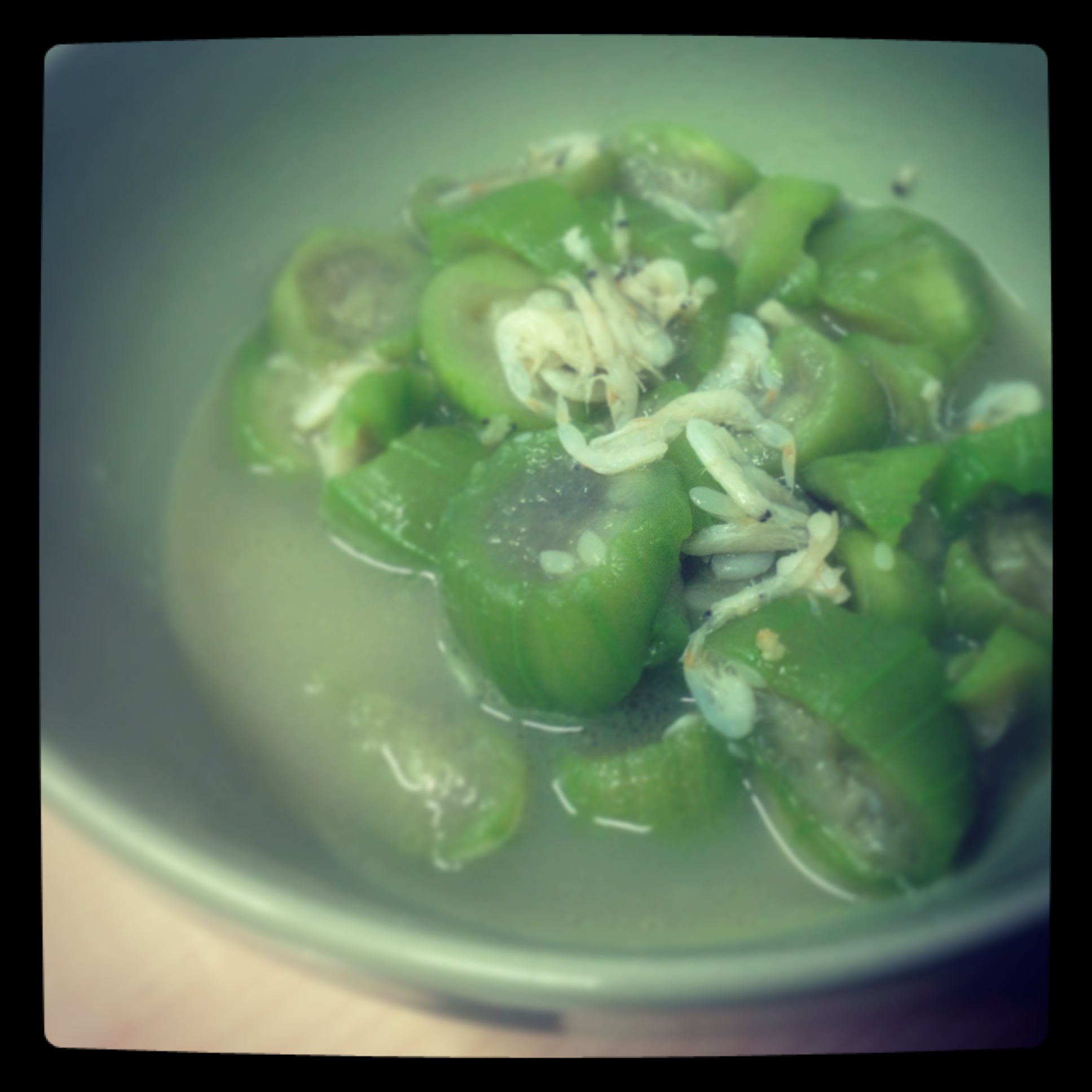
There’s a common vegetable here that I love, 丝瓜 (si gua), which is often found in soups and stir-fries at restaurants. It is commonly translated in menus as “towel gourd,” though Google prefers to call it “luffa,” which is derived from its scientific name (apparently it turns into loofahs when it grows older).

Baidu Baike

According to Wikipedia, it is sometimes referred to Chinese okra, which I’ve heard used, though I can’t say if it actually refers to the si gua I’m talking about. To add to the confusion, Wikipedia says the species is acutangula, while Baidu says it’s cylindrica. I don’t know what I’m eating! (A si gua.)

Anyway, while it’s fairly common on restaurant menus — it sort of just pops up when you’re least expecting, and I always just know that it’s a a si gua in that picture — I didn’t think it was right under my nose the whole time. I am fairly used to not knowing what most things are in China, firstly because I’m no culinary wizard and secondly because Chinese vegetables be Chinese and, let’s be honest,  I barely know my vegetables in English. My food world is especially bizarre because I know Chinese food by their Chinese names and Western food by their English names, and only rarely do I know what they might be in another language. Plus, food comes to me all prepared and cut up — how am I supposed to know what they actually look like??

So it was only the other day that I remembered and bothered to ask my parents about si gua. My mom said that one kind is skinny and long, and my dad said that they are hairy, but then they got into an argument because my mom said that they aren’t hairy (they really aren’t). In the end, I just looked it up online and realized I’ve seen them. A lot. They look like really long cucumbers but with ridges. (As an aside, lots of things look like cucumbers in China with slightly different bumpy skins, some of which are actually cucumbers.) And when I got to the market, I found out that they are kind of squishy, too, like an eggplant. I bought some and then went home to stir-fry them with some garlic and xia mi (the tiny dried shrimp things, not the Chinese music streaming site) and decided that I am the greatest.

Si gua, chao’d.

Weekend fun: Poached eggs, scone-biscuits and gnocchi

I hadn’t planned on making so much stuff over the weekend, but once I get started cooking and making, it’s kind of hard to stop. The start was breakfast. I thought about making the usual scrambled eggs and toast English muffin, but why take the easy way out? The week before, I had caved in and bought myself a fancy cookbook, How to Boil an Egg (my first cookbook, ever, which might be kind of weird for someone who likes to cook and try new recipes?), so I thought maybe I should start trying some of the recipes. The book is egg-centric (and no, not eccentric with a pun), and it teaches me how to poach an egg, something I love to eat but never had any idea how to do. Why I never googled it, I don’t know — maybe I thought it would require me to be clever or use fancy tools. But it doesn’t! All I have to do, or have boyfriend do, is create a frenzied whirlpool in a pot of boiling water, crack an egg in it and watch it cook until I want to eat it. Then place it atop half a toasted English muffin with some mustard and fried spinach, sprinkle with sea salt, et voila! A simple yet delicious breakfast.

My second poached egg!

After breakfast, I wanted to bake something, but I wasn’t sure what. I had some green onions left over from when I made cong you bing earlier in the week, so I focused on the curry, leek and cheddar scones. Scones are really biscuits, which I never knew until boyfriend told me that biscuits are “kind of like scones” and that English muffins aren’t actually the English version of muffins but also “kind of like scones”. Rose Carrarini, the British author and owner of Rose Bakery in Paris, helpfully explains this cultural difference in the book. I digress. Scones are biscuits.

So while boyfriend was catching up on House of Cards (or Zhi Pai Wu), I began grating some cheddar, cooking the leeks and making the dough. In China, there is no such thing as all-purpose flour (unless it’s right in front of me and I just don’t know what it’s called), but there are a whole bunch of specialty flours, such as bread flour, dumpling flour, self-rising flour, and whole wheat flour. I use whole wheat for most everything; it doesn’t ruin my recipes but it does tend to weigh down everything I bake. Likewise, these scones came out a bit dry and dense — certainly not fluffy and buttery like any good Southern biscuit — but the smell and flavor were deliciously spot-on.

Definitely biscuits.

After my biscuits were done, I moved onto spinach gnocchi. I’m pretty sure I screwed this recipe up — I couldn’t find ricotta so I substituted with cottage cheese, which may have been a big mistake — but there was no way I was making a pliable dough with just 4 tbsp of flour. I added loads more, and the result was kind of bland, but still edible. It looked like spinach gnocchi, at least.

By the time I had eaten everything and stopped making food, it was almost 10 p.m. If I hadn’t had to work today, I would’ve tried to bake a dessert. Having so many recipes right there conveniently in front of me — it was like a drug. If we lived in my dream world, my pantry would always be stocked with fresh ingredients that I could whip up anything that sounded delicious at a moment’s notice. Alas, my pantry is rarely stocked and most days I am too lazy to make anything because I have to do other things. Reality :(

Breakdown in China

You know how when something goes wrong, something else also goes wrong? And something else goes wrong? And then before you know it, everything is basically wrong?

In China, this rule of life manifests itself as a string of breakdowns. Something breaks or stops working or your landlord raises your rent, forcing you to find a new place, or I mean — something goes wrong right after you fixed the last wrong! Sometimes if you just put one thing off long enough, everything is wrong.

For example, for a while now, I’ve noticed a small pool of water collecting by a corner of our washing machine, near where a drain in our bathroom floor is. I have no idea where it comes from since it’s just a pool of water, and it didn’t seem to come from our washing machine. I’d wipe it up, but then a few days later, I’ll notice that it’s back. It’s almost creepy, like some kind of bathroom stalker slowly creeping back into my life and building up strength whenever I’m not looking so that it can attack me if I don’t mop it up. This has gone on for weeks.

Then, one day, a kitchen fuse blew, which went largely unnoticed. A flip of the switch and everything was OK again. But little did we know, it was the first sign of another breakdown.

A few days later, our microwave stopped working. The timer works and the microwave buzzes as if it’s on, but there no longer seems to be any waves that heat up our food. So far we’ve held onto it in hopes that if we whacked it just the right way, it will start working again.

Then last week, I noticed there was a lot of water in the cabinet under our bathroom sink, which had sadly destroyed quite a few of my womanly products, if you know what I mean. I couldn’t pinpoint a leak, so I thought I’d wait for a few days and see what was up. Sure enough, I checked it again today and it was so wet under there, it was like a tiny shower. Boyfriend called the wuye, who pinpointed the culprit: a broken 八字阀 (bazifa), which is apparently a type of valve.

While he was fixing our sink, boyfriend noticed the fuse had tripped again and it kept shutting off. We consulted the wuye again and was told that it was our water kettle, which I had bought only last year, leaking electricity (is this the correct English term?). He told me, in the way a father would tell a child, not to use the kettle anymore. I dutifully promised him I wouldn’t.

So now we have a broken kettle, broken microwave and a mysterious pool of water that has moved from beside the washing machine to right in front of the sink. I’m wondering if it’s just leftover from the leak, but why is it coming out now? China is so mysterious! Hopefully, it is the last of our breakdowns for a while because we have a busy May coming up — a perfect time for a host of new problems to fester!

Making tofu under the Great Wall

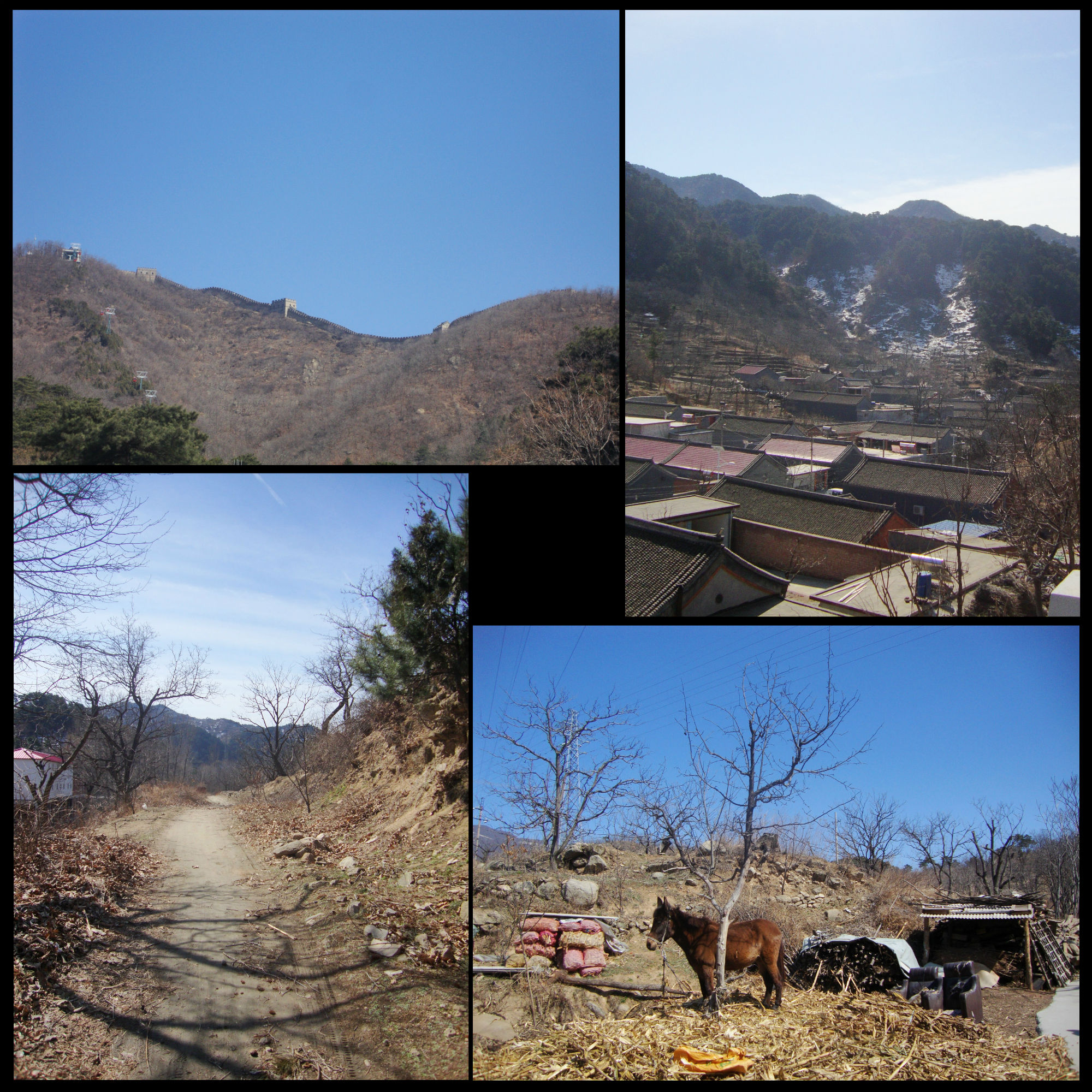
A few weekends ago, on a bright, crisp, late-winter day, boyfriend and I headed up to The Schoolhouse at Mutianyu, which is, as its name suggests, at the base of the Mutianyu section of the Great Wall. Beijing was just beginning to thaw after a long, cold winter — it had even snowed during the week — but it was a gorgeous day.

Clockwise from top left: Mutianyu Great Wall; the village below; a solitary donkey; Mutianyu Fishing Village.

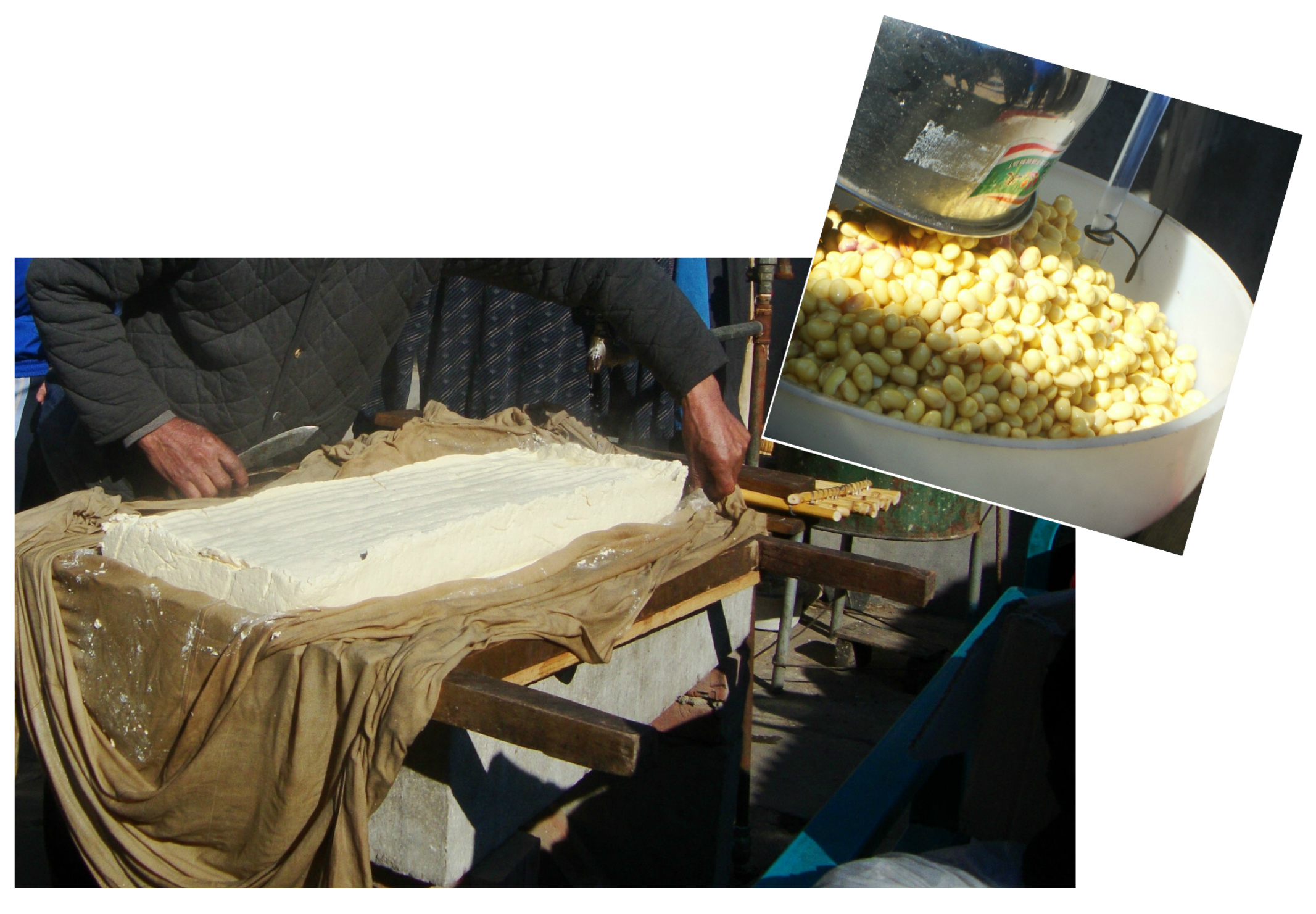
It was actually only the second time I’d been to the Great Wall since I moved to Beijing, and a different section from the one I went to before (I also climbed the Wall when I came on holiday in 2002, although I have no idea which section that was.) I didn’t expect to have the morning to roam, so I wasn’t wearing the most appropriate clothes for hiking the Wall. Instead we trekked along the road leading up to the Wall and through the villages surrounding it below, which is actually more interesting than the Wall itself. Most of the villagers here appear to be farmers of sorts, and it’s a world away from the urban center of Beijing. We had actually come to see how tofu is made, as demonstrated by a husband-and-wife team that supplies the Schoolhouse with their fresh tofu. It turned out to be much less intensive than I thought it would be, and it only took about an hour from start to finish. Now I feel like I should make my own tofu, but unfortunately boyfriend doesn’t eat it so my hard work won’t have much of a payoff.

From soybeans to tofu.

All in all, it was great to get out of the city and breathe. More pictures from the excursion here.

The rise and fall and power of the cupcake

The Wall Street Journal looks at the downfall of the cupcake industry today, marked by the crash of Crumbs’ stock — from more than $13 a share in 2011 to under $2 today.

I remember when my sister first introduced the cupcake fad to me. I was visiting her in San Francisco soon after she had moved there. It was 2006, so cupcakes were just starting to catch on. “Oh, there’s this place that just sells cupcakes!” she told me. I pondered the novelty and we went to check it out. It was Kara’s Cupcakes, a cute little shop (there were only a few seats at a bar along the wall) decked out in pink.

Cupcakes, however, never made it to North Carolina before I left it. Imagine my delight when I came to Beijing, where the cupcake fad had already hit and a new baker in town was just setting up shop. Lollipop Bakery has been quite successful, and since then a couple of others have brought ever more flavors and choices. There are now at least five vendors that I know of supplying Beijing’s masses with cupcakes, and I’m sure there are a few that I’ve forgotten or aren’t aware of — from literally zero five years ago. Of course, a few shops can’t compare to the rather obscene number of cupcake stores in New York (really? There are 25 Crumbs shops alone?) and now in the Triangle area. But that is mostly due to differences in tastes and higher cost barriers — a single cupcake goes for about RMB 25, which is the equivalent of a decent meal (a cupcake is not a decent meal).

Still, the cupcake fad has encouraged other would-be bakers to bring their specialties to Beijing. Since I arrived in 2009, there has been a steady proliferation of small, delivery-only operations serving up everything from cakes and bagels to pies, cookies and even granola. Craft beer has also become very popular. None of these constitutes a fad on their own (except for maybe the beer), but taken together, they could signal a pivotal change in Chinese tastes. I still see Chinese girls sharing a single cupcake and eating it with a fork, carefully avoiding the frosting, but I suppose they don’t have to eat the things we eat the way we eat them.

So while cupcakes may not be cool anymore, I hope they manage to stick around — if only because I find them cute and dainty and more fun to make than a regular cake. At the very least, I’ll keep making them with my tea cupcakes set and handy-dandy cupcake maker. Cuz I’m twee like that.

The drought in Yunnan

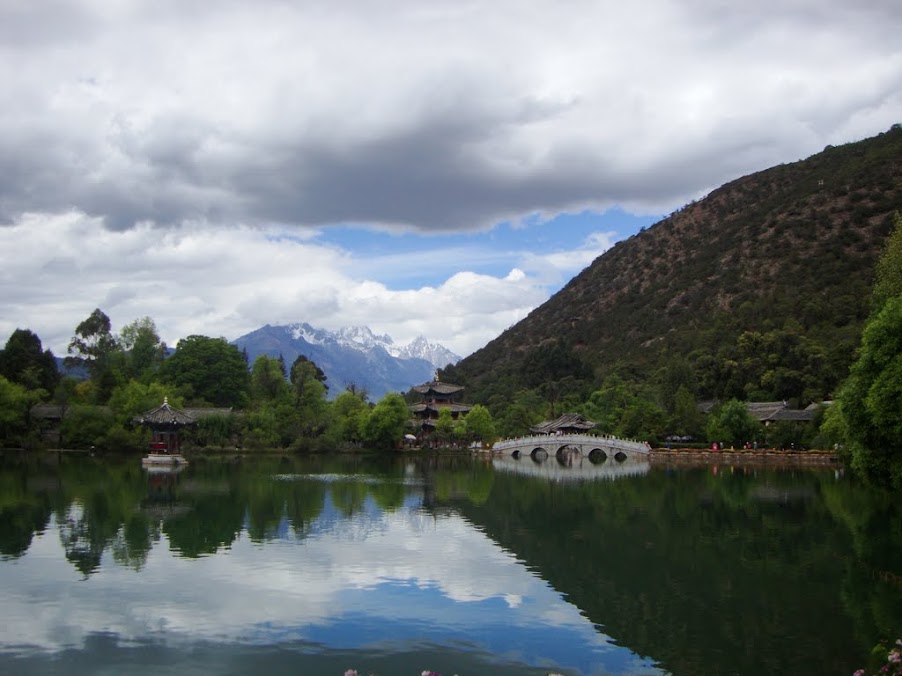
Today I came across an alarming article on the Scientific American website about the environmental degradation of Yunnan, which I visited for a few short days in 2011. At that time, I did not know — and certainly our tour guide didn’t mention — that the province was in the middle of a serious drought, which still lasts to this day. Accompanying the article is a picture of Black Dragon Pool, taken about a year after I visited:

Lijiang Old City: Black Dragon Park
Black Dragon Pool in May 2012 (Flickr/Winston Smith)

Here is a picture of the same lake in May 2011, when I went.

Black Dragon Pool in May 2011.

While Black Dragon Pool is man-made, it has been around since 1737. It is famous for its scenic views and perfect reflection of the Jade Dragon Snow Mountain, the tallest peaks in the region.

Much is written about China’s environmental problems, but they mostly focus on pollution and air quality. Droughts have also been a common problem in other Chinese regions recently. The Scientific American article neatly documents the detrimental impact, on both the economy and people’s livelihoods, they have in a province that is widely known for its environmental beauty — clear lakes, lush landscapes and snow-capped mountains. Most of China’s water supply is derived from its far-flung reaches such as Yunnan; what happens if the rivers can’t even supply the western regions? For more on what it’s like in Yunnan now, Time has a good photo gallery of places from around the province.