A couple of weekends back, we picked up a bunch of big scallions for 1 or 2 kuai. Scallions (da cong or “big onion”) here come in three sizes: regular, big and giant. The ones we got were like the big ones in the picture below (not even the giant ones!). They literally did not fit in our fridge, so I had to cut most of the green part off.
Baidu Baike
Naturally, last night, I still had some left, so I decided to make one of my favorites, scallion pancakes, to go along with some steamed carrot and zucchini. Usually I use jiaozi fen (dumpling flour) or zi fa fen (self-rising flour), but it’s not something I use very often and I had run out a while ago and never got anymore. But fen is fen, so I used what I did have: whole wheat all purpose flour.
It’s actually taken me a long time to realize that I had been buying whole wheat flour. I’ve been making all of my desserts with it for the past two or so years, and I always wondered what the weird brown specks were when I sifted the flour. I was kind of concerned because they aren’t really visible until you sifted the flour, when it separates from the whiter part of the endosperm, which is less coarse so it sifts more easily. What is that?, I thought. But one day, at the Western supermarket, I saw a bag labeled whole wheat flour that looked like my flour — and that’s how I learned.
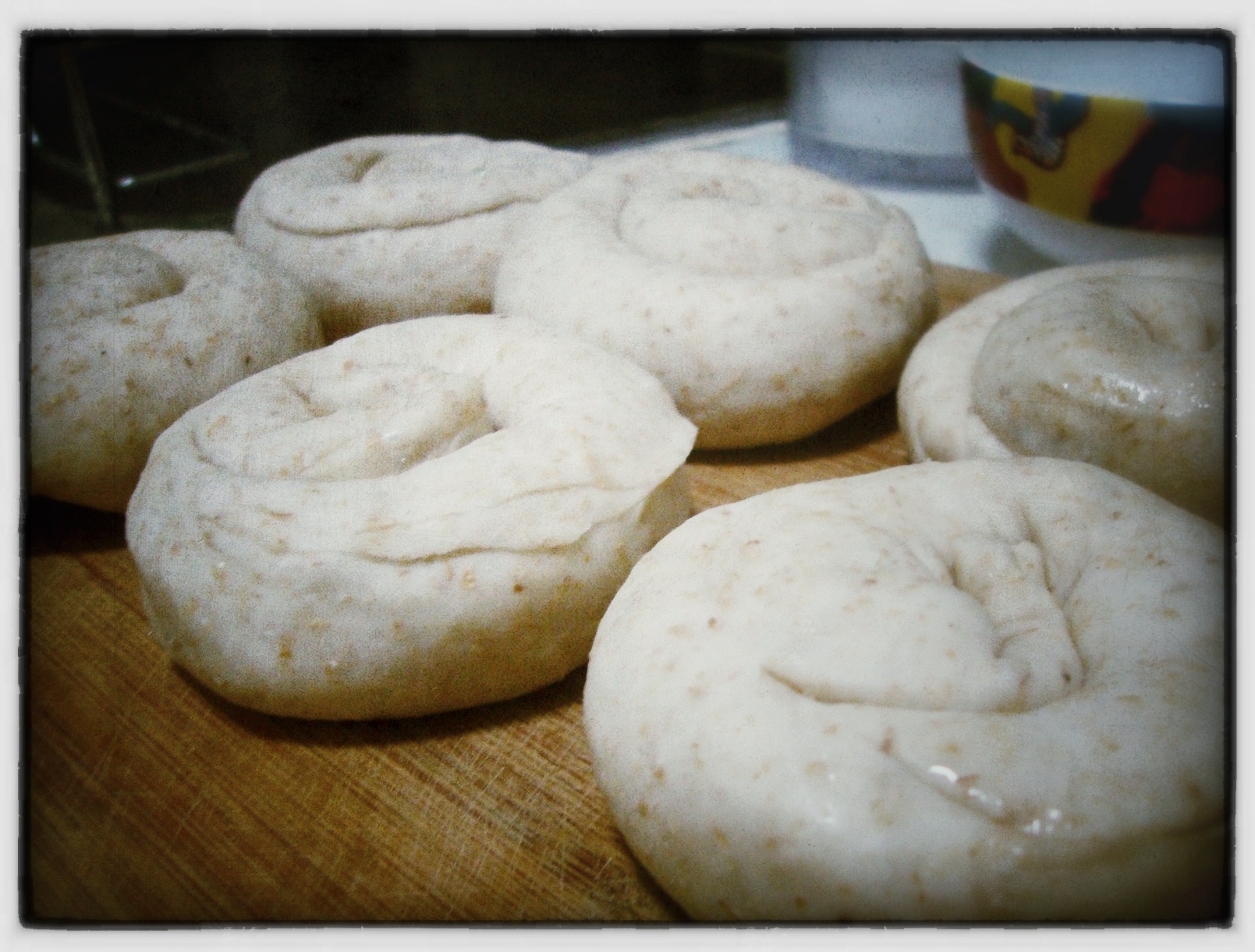
Anyway. Behold my pre-cooked, pre-flattened cong you bing!
A smarter, healthier way to eat pan-fried oily dough.
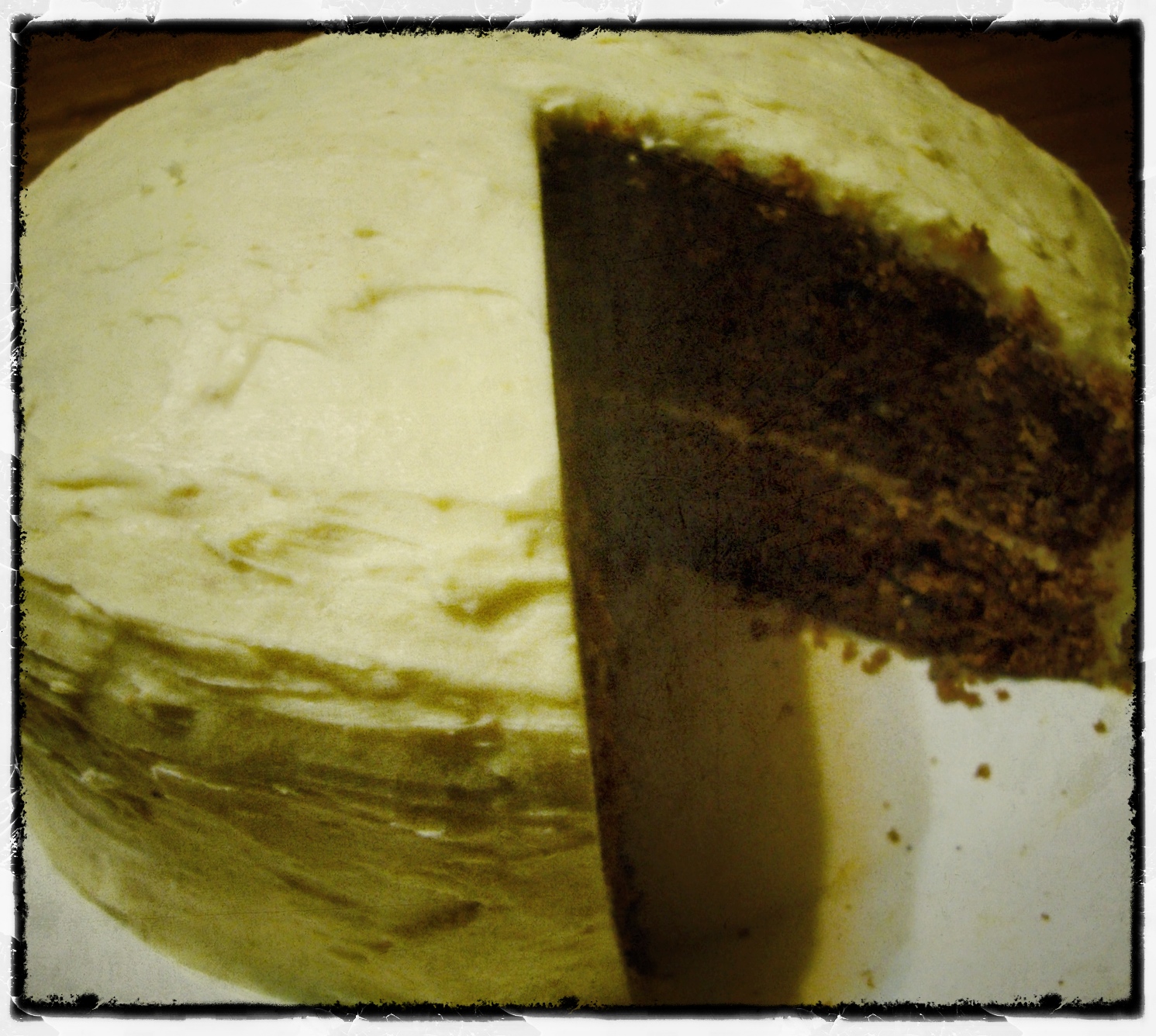
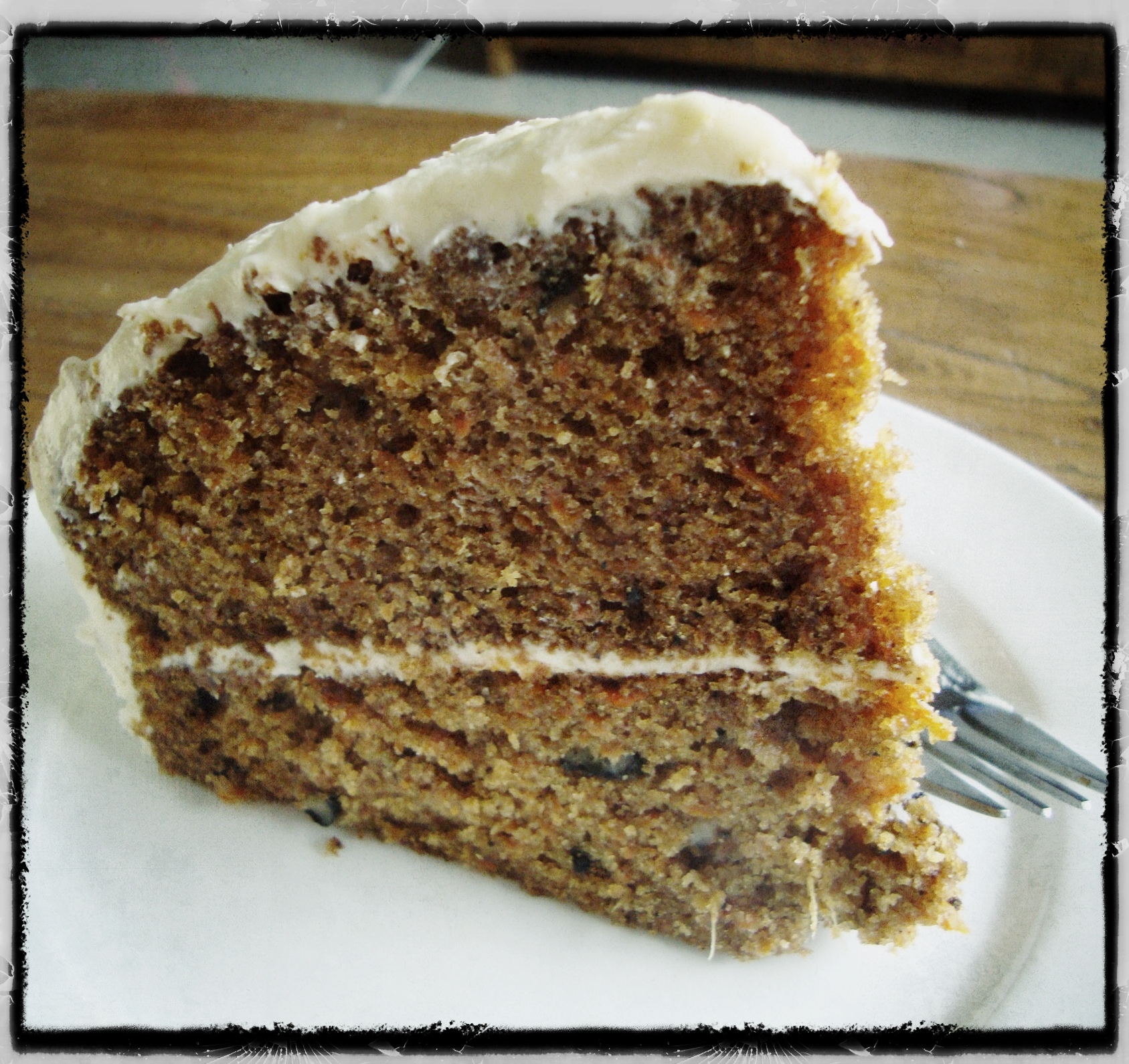
It’s a carrot cake with ginger lemon cream cheese frosting! Boyfriend once told me his favorite cake is of the carrot variety. It’s a wonder it’s taken me so long to make one, though, considering how easy they are to make and how accessible the ingredients are in China. I was going to add some candied carrot curls for decoration, but I was too eager to eat it.
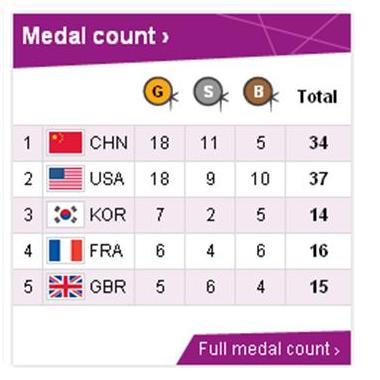
I just don’t understand. We have the most medals, and we worked so hard to catch up to China on golds, and now we have and we’re still second?
Unacceptable! :(
This isn’t over yet, China!
Anyway, I gather you are all having fun with the Olympics as well. Last week, I took a brief nighttime nap and woke up at 4 in the morning to watch the Opening Ceremony, whilst my fellow Americans succumbed to the tyranny of NBC, still unsuspecting of the network channel’s mesmerizing incompetence, gross ignorance and bizarre choices, to watch a recording of it hours later. I’ll admit that up until the Olympics, I was close to apathetic about it, while everyone was asking me if I was excited.
“No, I’m OK,” I had to say. I felt kind of lame, but I couldn’t lie.
It is times like these when I wish I had TV. I’ve been resorting to online streams that have been holding up well (so far! Knock on wood!), despite our schizophrenic Internet connection and harsh IOC broadcasting rights. Unfortunately, while we can catch some of the events at night, a lot of things happen while we’re sleeping. This means that unless I really care (which, being the Olympics, I don’t ), I won’t get to see some things at all. One thing I’m glad to miss out on, though, is the hilariously/infuriatingly inept NBC coverageeveryone keeps ranting about.
Watching the Olympics also has made me realize how long I’ve been in Beijing now. When I first moved here, the 2008 Olympics had taken place less than a year before. The event was still fresh in everyone’s minds. The Bird’s Nest and Water Cube were still novelties, and the pride of the Olympics still hung in the air. Then, China dominated the medal count, which is really the only thing that matters, with 15 more gold medals than its nearest competitor, the U.S. Hopefully, it’ll be much closer this time around or, ideally, reversed.
Remember that derecho that passed through Washington, D.C., last month that left 1.5 million people without power? That was a storm. Rain and winds up to 90 mph, knocked-down trees, caved-in roofs, minor flooding — not saying some of those things couldn’t have been avoided (most of all the week-long power outage), but it’s hurricane-like weather. There’s only so much you can do to protect yourself.
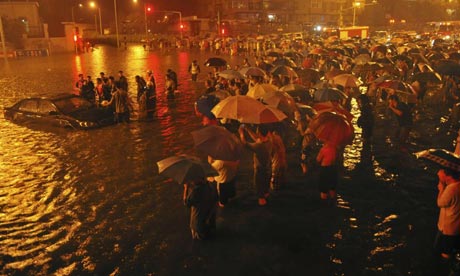
What happened in Beijing on Saturday? Moderately heavy rain that lasted from noon to late in the night, with a little lightning and thunder thrown in for good measure. This is similar to your typical summer thunderstorm, except that it lasted for 14 hours. The city averaged 6.7 inches of rainfall, with a distant suburb recording 18 inches of rain. It was the heaviest rainstorm in more than 60 years.
And yet, it’s just rain — 6.7 inches of over the span of more than half a day.
Why, why, why, then, did the roads look like this?
Reuters/Joe Chan
Why did 37 people have to die?
Why did so many roofs cave in? Our bartender, whose bar had its own hole in the roof, said all the repairmen were booked up on Sunday.
Why were the roads all blocked, making it nearly impossible to catch a bus to go anywhere?
Look, I’m no China expert, but I’ve been in Beijing long enough to know that this city can’t handle any amount of rain whatsoever — which is silly because summer storms are quite frequent here. Moreover, it’s the Chinese capital, or from a government official’s point-of-view, the grand showcase of China. One hour of rain, and the back alleys of Sanlitun are completely drowned in ankle deep water. Even Tiananmen Square, the heart of the China, turns into one giant pool. This is not something you would want to show off, if you were a government official.
Many people have noticed the No. 1 culprit behind the flooding: crappy infrastructure and poor planning. Beijing is literally paved over with roads and giant sidewalks. Their buildings and building complexes are ginormous, set away from the road, but every inch between them is paved over. I can’t even remember the last time I saw grass. But all cities are concrete jungles, you say? Beijing is not really a city, it is a land of malls that you’d find in suburbia USA and skyscrapers surrounded by parking lots. So it’s not like it doesn’t have green space, they just decided to pave it all over.
The lack of green space wouldn’t be such a problem, though, if city officials knew how a proper drainage system works. There are always giant puddles at intersections by the sidewalk and a drain that is 3 feet away on top of the slope. If I knew any of them, I’d offer them this sage advice: Don’t put the damn drains away from where the water collects. Water flows down to the lowest point. Put a drain there.
“In just one day, it rained as much as it normally rains in six months in Beijing,” said Zhang Junfeng, a senior engineer from the Ministry of Transport who runs weekend tours of Beijing reservoirs and gives lectures on water conservancy. “No drainage system can withstand rains this big.”
Flooding — it happens! But not to this extent over 6 inches of rain delivered over half a day. As someone who grew up along the Eastern seaboard and has experienced stormier storms, Beijing is lucky it doesn’t get hit by hurricanes. If it could barely survive this kind of rainfall, then it’s going to get slaughtered in an actual big storm.
After a reminder from James Fallows, I finally watched “Last Train Home“, a 2009 documentary by Lixin Fan that has won all sorts of awards (and is available on Netflix!). Fan follows an older couple from rural Sichuan as they work in a Guangzhou factory and try to find a way home every Spring Festival to see their children.
In Beijing, there are many reminders that this is a still-developing country, from the crumbled hutongs beside a new skyscraper to the shiny black Audis zooming by an old man riding a decrepit rickshaw. However, I remain sheltered from the 130 million migrant workers, who are mainly working in the factories of Southern China and who are mainly the ones involved in China’s meteoric rise from poverty. (If you are trying to picture 130 million workers, the U.S.’s entire labor force is about 150 million.) These people’s lives straddle the impoverished countryside and the newly rich factory-cities, a concept that seems easy enough to imagine but is actually so much more complex when you witness it firsthand. The Last Train Home offers an intimate look into the personal lives of migrants, which consists of things other than just the abysmal factory conditions conscientious Americans like to focus on.
For what it’s worth, this is the human side of China’s development, which is much more compelling in my opinion than a rising RMB, export statistics and political talking points. It has dramatic consequences, not just for the nation as a whole, but for both the migrant worker and his family back home. For more stories about migrant workers and how going out has transformed their lives and the lives of their families back home, try “Factory Girls” by Leslie Chang or “Eating Bitterness” by Michelle Loyalka.
It must be a universal truth that every year that I am in China, I will get some sort of random health problem. The first year I was here, I got devil eyes. Last year, I got spots. Now I have mouth sores, inside and out! From whence did they come? I don’t know, but my mouth has been one big canker sore since last weekend. Or multiple tiny ones lining my oral cavity. And now I can feel the tingling of cold sores (yes, I know they’re herpes! I have herpes, OK?!?) on my lips.
Thankfully, I’ve been extremely fortunate that none of my health problems have been serious. I hope this current problem isn’t, either. Sometimes I just blame China for being a dirty, dirty country because it’s so hard to figure out the trigger for these sudden onsets of infections or whatever they are (except for the spots, which I eventually figured out were amoxicillin-related). But of course, it’s silly to attribute to China the things that happen to me here that never happened at home. So I won’t. Even though I want to.
Apart from this one time when a taxi driver seemed to fall madly in love with me as he was driving me home, I don’t think any Chinese man has ever taken a fancy to me. I’ve always felt that there just wasn’t any connection there, but I didn’t know why. This list at least partially explains it.
I rated myself. Here’s how I ranked, based on how I imagine my boyfriend should answer!
Taller than 160 cm, for every 1 cm +100
Shorter than 160 cm, for every 1 cm -100: -700 (I’m 5′, or about 153 cm)
Long hair +150: +150
Can dance +100
Can sing +100
Weight over 110 jin (1/2 kg), for every 10 Jin -100
Weight under 100 jin, for every 10 Jin -100
Near sighted, if more than 300 degrees, for each 100 degrees over –100: -50 (not sure what my eyesight actually is, but I only have one near-sighted eye)
If had relationship before, for each time dumped –100, each time dumping +100
Never had a boyfriend before +100
Older than 23, for each year -100: -200
Has medical history, for each one -100
Doesn’t know how to play Majiang +100
Doesn’t know how to drink +100
Heavy drinker -200
Smoker-200
Has pet(s) +100
Like pets +50: +50
Can cook +300: +300 (I should get more for baking)
Gentle and lovely +100: +100
Childish and stubborn -200: -200
Always tells you she misses you +100: +50 (not “always”)
Likes to bring you to her classmate get-togethers +100: +100
Knows how to care for you, doesn’t let you smoke and drink +100: +50 (no smoking!)
Doesn’t disturb your personal life +100: +100 (I guess?)
Always bugs you to go shopping -100
Puts on makeup the way you like it +100: +100
Doesn’t know how to do laundry -200
Fights with you every day -200
No matter whose fault it is, always contact you first after a fight +100
You talk her to asleep every night +100
Well-behaved +100: +100
Only well-behaved to you +200
Will cry for you +100: +100
Always makes you cry -100
Independent; does not always want you to buy things for her +200: +200
Not difficult in front of your friends +100: +100
Knows how to put on make up +100: +100
Does laundry for you +100: +100
Mature +100: +100 (also stupid and childish)
Does not like to laugh when with you -200
Wants you to ditch school (work) to be with her -200
Fails exams, for each -100
Gives you things made by her +100: +100
Always says you are ugly -200
Never took sticker pictures –200: -200 (????)
1500 – 2500: Normal
2500 – 3500: Excellent
Over 3500: Your life is set, hurry up and marry her before it’s too late.
That gives me a total of 550, which doesn’t even rank on their scale. I can see why Chinese guys aren’t attracted to me now, if these are the type of things they go for. To be marry-able, I have to be all of the positives (and then some) and none of the negatives! Of course, many a Chinese woman have lambasted the list as well, so at least I know I’m not alone.
I love riding my bike around the neighborhood. It’s like being able to drive again (except probably much more dangerous, for both safety and health reasons). It cuts down on time spent waiting for buses, time spent walking and, most importantly, time spent being angry at stupid traffic. God, traffic is stupid in China.*
Cycling does not always go smoothly, though. I’ve already run into someone (on a scooter), and almost run over several pedestrians, not to mention almost had a car run into me. These are all things I assumed would happen before getting a bike. But bike riding in China is all about knowing the dangers of a lawless road filled with vehicles of all varieties (shiny black Audis, giant accordion buses, giant coach buses, mian bao ches, three-wheelers hauling loads three times the size of the bike itself, rickshaws, motorbikes, scooters, the occasional donkey-pulled cart), plus wayward pedestrians who have a very loose grasp on their lives — and still riding your bike anyway. All of these people and drivers are liable to pull into your path at any given moment without notice and without them noticing you. The trick to riding safely really isn’t to be noticeable, but to have rapid reflexes. I tried to observe whether there were possible rules of the road, but I quickly determined there are none. Go when and where you can go, and don’t put yourself in someone else’s way (although, often they are in your way. Brats). Relax, enjoy the pandemonium, take comfort in knowing that you saved both time and money, and breathe in some delicious Beijing pollution.**
It also helps to be complimented on your bike. I’m fully aware my bright pink (Barbie, according to some) bike is not to everyone’s tastes. However, the other day as I was getting my bike after work, one excellent middle-aged Chinese man made known to me his admiration for my bike. “That’s a nice bike you have,” he said in Chinese, along with other things that were along the same lines. I beamed all the way home.
*Seriously stupid. For example, at the main intersection of the road my apartment building is on and the road my office building is on, the right turn signal is green when the oncoming traffic light is green. I have been able to explain a lot of other stupid rules, but this one is still a mystery to me.