The AP, China and taxes

It’s not unusual to find misleading, distorted stories in the media. It’s also not unusual for me to wave off the distortions, because, well, I know better and I can glean something from the story anyway. Today, however, I want to direct you to this AP story about foreigners in China squeezed by pensions, taxes. Or that’s what they want you to think. I know who you’re thinking about now — me, right? I would know!

So: Are pensions and taxes squeezing me?

Not really!

First of all, which is worse to an American: China or taxes? Which is more responsible for our country’s decline? There’s no denying, especially with it perpetually being election season, that there are strong cases to be made for both. But what happens when you combine the two? How much worse is it to be paying taxes to China??? Overly dramatic headline.

Communist China does not take all of my hard-earned RMBs and give it to the PLA to dig a bunch of tunnels for their larger-than-defense-analysts-think nuclear arsenal. At my old job, I gave them less than 10 percent of my gross income (base pay + various stipends). If you’re really interested in how China calculates how much individual income tax to collect from people, Wikipedia has a handy table!

Wikipedia, unfortunately, does not have a handy table about the new tax in question: the Social Insurance Tax. Admittedly, there are still many legal and implementation issues surrounding the tax and the law that invented it. Anyway, here’s what the AP article says about it:

The biggest worry for many is an abrupt order for foreign workers and their employers to start paying up to 40 percent of their wages for pensions and other welfare.

[…]

The pension and medical charges took effect Oct. 15, less than six months after they were announced.

This is not true. The tax was first proposed last year in April (more than 1.5 years ago!), promulgated that October and effective nationwide July 1 of this year. Basically, the law was announced a year ago before they took effect, and the effectiveness was even delayed by a few months from the original date in July — all because foreign companies balked at the idea (when it was pointed out at the end of May by state media) of paying more and stirred up debate.

How much more? Quite a bit! The exact amount is determined locally, but generally:

Based on what applies to Chinese employees, the cost could be 37% of monthly income charged to employers and 11% for employees, up to a threshold amount set locally, according to Christopher Xing, a China tax partner at KPMG. The charge in Shanghai, for instance, is based on a maximum monthly income of 11,688 yuan, about $1,800, meaning a monthly hit of $666 per worker for employers and $198 for each employee. (emphasis mine)

From another WSJ article with more details, in Beijing, the salary cap is 12,603 yuan ($1,981) and individual contribution is just a smidgen over 10 percent.

With soaring inflation and rising costs of living, I could probably use that money. But another 1,500 RMB is hardly being “squeezed.” Sure, employers have to pay about 32 percent more, so I can sort of understand if they feel squeezed. But then the article decided to focus on multinational corporations, and all of my sympathy melted away.

And, hey, look at that part I bolded above: the same tax applies to the Chinese. They pay into the same fund at the same rates. So do Chinese companies that hire foreigners (and they hire quite a few). But you wouldn’t know that by reading the AP article because they talk about it like it’s some racist money-sucking scheme by lumping it with this paragraph:

The changes come against a backdrop of critical coverage by state media of product safety and other complaints against high-profile corporations such as Wal-Mart Stores Inc. and energy giant ConocoPhillips Co. Companies also are uneasily awaiting the release of new patent and copyright rules they worry might push them to hand over technology.

Journalists call this “context” but it’s just not right. There have been loads of stories about how foreign companies feel like China is becoming unfriendlier all the time. I agree! China is hardly innocent when it comes to ripping off foreigners (it’s true, they see us as loaded cash registers — visa fees? giant import duties? beer that is double the price of what it should be?), but it’s just not quite the case here.

Now, the problem with the tax is one most Republicans can relate to (but my problem is based on reality). We foreigners are essentially paying into something that is supposed to provide us benefits but, in reality, probably never will. The five “social insurances,” as the Chinese call them, are pension (think Social Security), medical (think Medicare), unemployment (think Unemployment Benefits), work-related injuries and maternity. Work-related injuries and maternity insurance would be the ones most likely applicable to foreign workers, who often stay for a few years and leave. Because our visas are often tied to our employment, we’re kicked out of the country if we don’t have a job, so it’s hard to think of a case where we could collect unemployment benefits. For medical care, most foreigners would never go to a Chinese hospital for something they need help with payment for. And pensions? Ha. China practically actively discourages foreigners from really settling down here.

Which leads to the second reason a lot of foreigners have a problem with the tax: The law is just not clear. Can we get our money back without excessive bureaucratic hurdles? We just don’t know. Probably not. But I’m not going to squabble about losing a month’s salary’s worth to the greedy Chinese government when I’m already living a comfortable life (as most, if not all, foreigners* are) and don’t need the money.

That is, I won’t miss the money until I do need it to help pay the medical expenses incurred from my Beijing pollution-induced lung cancer. Then I probably will wish I hadn’t been so nice to the Commies :(

*When both Western media and Chinese use the term foreigner, they usually mean rich people from the West. I apply this definition here, knowing full well that there are many foreigners from poorer parts of the world living here.

Pre-Thanksgiving surprise

One of the things I like most about China is that, even though I’ve lived here for two (!!) years now, there are still surprises. For instance, when I found gummy penguins outside my office a couple of weeks ago. And then, in another instance, today, when I was at Wal-Mart after work buying the last of my groceries for Thanksgiving and I saw these babies in the produce section!

Muuuuuuhhhhhhhh.

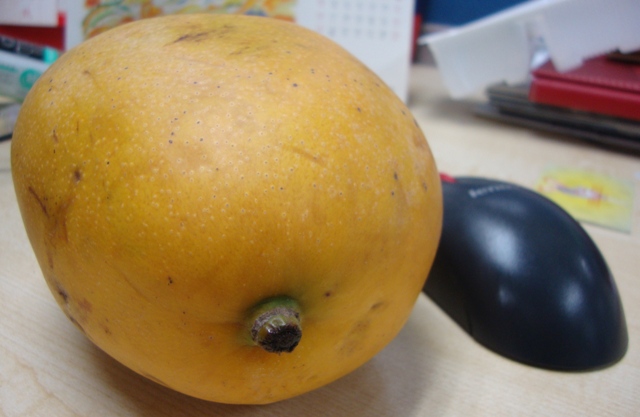
These were a favorite of mine when I still lived at home and my mommy would qing chao them with some garlic. I called them Old Man squash because, well, that’s what they look like. They are known as chayote in the West and fo shou gua (佛手瓜) in China, or Buddha hand squash. They’re not usually shiny, but I forgot to snap a picture until after I’d peeled the first one. You can kind of see the other one in its wrinkly glory in the back there.

I really didn’t think I’d find it in Beijing ever, just because my mommy said it was a Southern China/SE Asia kind of thing. Chayote actually is native to Mexico and is very popular in Latin and South America, so who knows where these were from. Based on the price though, it seems like it’s a domestic product, but it’s odd I’ve never seen them in the supermarkets or produce stands before. The ones in the U.S. are usually imported from Mexico. It’s a pretty abundant vegetable and relatively inexpensive, but these two cost me 1.24 kuai total (19 cents!) at RMB 3.2 per kilogram. In other words, my dinner tonight cost less than a quarter. That’s got to be a record.

Penguins outside my office!

The candy man staked out in front of my office today at lunch. Naturally, he and his cart captured my attention with all its colorful, sugary goodness. So many kinds of gummy candy! Gummy bears, gummy lychee, gummy Coke bottles, gummy worms, sour gummies…. Then, I noticed these!

March of the penguins.

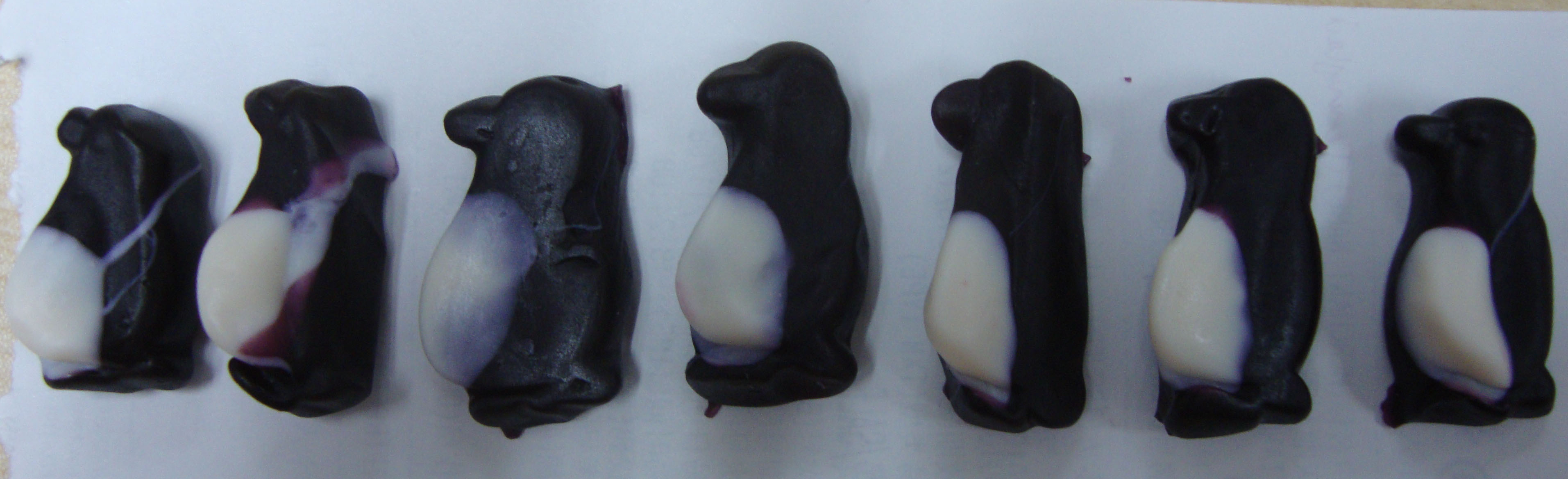
Gummy penguins! My sister introduced me to these adorable gummy candy last year when she found them at some candy store in the middle of nowhere. As an added bonus, they were peach-flavored, my favorite! These ones are blueberry, though, and a bit pricey at 25 kuai per 500 grams (about $3.94 a pound). I snatched some up right away, spending my last 10 kuai before I realized I could’ve probably bargained a little. Maybe. It wasn’t much, and I wish I could have bought more! The candy man said he only rarely comes to my office — which is true. I’ve only seen candy being sold during lunch maybe once or twice. Now I can only hope our paths will meet again one day :(

Another pic after the jump! Continue reading

Pollution: A Western conspiracy?

I’ve spent the better part of this week not believing air quality data provided by one U.S. Embassy, as suggested to me by this Chinese official. From Caijing:

“China’s air quality should not be judged from data released by foreign embassies in Beijing,” Du Shaozhong, vice head and spokesman of Beijing’s environmental protection bureau, said in an interview in Weibo.com, the twitter-like microblog in China, referring to U.S. embassy’s monitoring data.

After getting stuck around “hazardous” for a week, it’s back down to a more manageable “unhealthy” level. But they’re probably just trying to make China look bad. Even though China does look bad. I mean, seriously. It’s been this poopy color of grey for a very long time now. On Sunday, flights couldn’t even land (I asked the airline representatives, who dutifully told me the delays were caused by bad weather conditions) and I was stuck at the airport all day, waiting for a flight that was no longer coming until the next day.

But South China Morning Post seems to have uncovered the reason why Chinese data paint much rosier pictures, and why officials have done little to correct this minor environmental problem.

According to the Broad Group, a Hunan-based air-conditioner maker, at least 200 air purifiers are installed inside Zhongnanhai, the top leadership compound where President Hu Jintao, Premier Wen Jiabao and other leaders work and live.

“They are everywhere in Zhongnanhai, from living rooms and meeting rooms to swimming pools and gyms,” the website of one of the company’s Beijing dealers said. “It is a blessing for the people that our purifiers have created a healthy and clean environment for state leaders.”

They even have portable ones that they take around when they have to leave their purifier-fortified compounds. They are so out of touch with reality that they even give air purifiers as presents to visiting officials, as if they need purifiers wherever they’re from.

China doesn’t even measure the most harmful particles, PM2.5, because “the time is not ripe,” (via James Fallows) which is basically the Chinese way of saying, “YOU CAN’T HANDLE THE TRUTH.”

Sigh. China. It’s like this.

The evolution of a street at lunch time

If I ever had any doubts about the reality of a rapidly developing China, they may be tempered by the explosion of lunch time choices available to me right in front of my office. When I first started working here food carts parked on the sidewalk carried little more than unappetizing pre-prepared he fan, a takeaway box of rice with two or three kinds of dishes, usually a meat and stir-fried veggies. And back then, there were maybe one or two people with a Styrofoam ice cooler.

Fast forward 1.5 years, and now this place is teeming with vendors. There are still hefan sellers, but they are competing with 10+ other vendors who are selling much more creative things. We’ve only gotten more and more options as time went on.

The veterans:

  • Upgraded hefan carts that allow you to choose which dishes to go with your rice; usually there are six or so dishes to choose from.
  • Roujiamo, a Chinese version of the hamburger, which can be filled with anything from chopped up pork to Chinese sausages.
  • Jianbing. Actually, this just appeared today (or recently), which I’ll explain in a minute. But for some time now, there has been a giant jianbing maker. Imagine making a crepe that’s the size of an XL New York-style pizza, then filling it with the sauce and fried dough and onions and cilantro and stuff. That’s how big these jianbings are. I tried one once. It was not very good.
  • “Sushi.” Just rolls with vegetables.
  • Fruit.

The ones who made it:

  • Liang fen/Liang pi, which is a cold dish with glass (starch) noodles, sliced cucumbers and other vegetables, tossed with a peanut sauce and oil.
  • Dumplings, now both steamed and fried, as well as fried baozi.
  • Cheap ice cream. This is gone now as the temperature has gotten colder.
  • Deep-fried squid balls, a Taiwanese street snack.

The noobs:

  • Wonton noodle soup. Seriously, what? I can’t even find wonton soup in most restaurants, and now it’s being sold on the street.
  • Chuanr. The ubiquitous skewers that are everywhere.
  • Roasted sweet potatoes. Technically, this is a seasonal snack, and they’ve been around before, but I’m putting it here because it’s just come back.
  • Roasted chestnuts. MMMMMMM.

I’m sure I’ve forgotten one or two things. Every once in a while, the police will come and I’ll get caught in a stampede of flatbed tricycles fleeing the scene, with still-hot metal plates trailing heat and oil behind them.

These carts are also in addition to a revamped bloc of restaurants next to our office, which all got facelifts or were shuttered and replaced with fancier, chicer restaurants. This facelift, of course, meant that my kiosks selling breakfast/lunch street food, such as jianbing and shaobing jia ji dan, and bubble tea were both dismantled. But today, as I mentioned earlier, I saw an extra jianbing cart out on the street in front of my office. And who was running it? The same lady who used to work at that breakfast stand. Good to know she’s back in business.

Speaking of bubble tea, when I first started working here, there was no bubble tea. That changed last year when the bubble tea kiosk on the small street next to my office. (Perhaps you’ll remember it as the one that got knocked down and came back as a tent at the start of summer.) Since then, two more ‑ or three, if you count the one going in the opposite direction ‑ have opened, which either shows the popularity of the drink in China or the lack of imagination of Chinese business owners. But I can’t get enough of the stuff, so I’m not complaining.

And the best news: my tea shop is closed temporarily again. Seems they are building a sturdier structure made of wood and metal. Might be good for my tea shop boys come winter.

A special Monday

Rumor has it that Li Changchun was in the building today. Boss informed us this morning that the building elevators would be out of service around 10 a.m. because a very senior official would be visiting. Shortly thereafter, we observed from our sixth floor window an armada of shiny black sedans and SUVs and beige vans parked all alongside our building, as well as an army of police. The lucky site was the floor above us, a mysterious place named China Illegal Internet Information Center, which basically censors the Internet. It also falls under the purview of CIPG, our website’s parent organization. Unfortunately, I did not catch a glimpse of Li, who, as one of the nine members of the Politburo, the cadre of seniors who run China, is the propaganda chief of the Communist Party. Or basically, the one who calls the shots regarding what can or cannot be said, on the internets and elsewhere. He’s so important that all the usual street vendors selling breakfast outside our office building were mysteriously absent this morning. And thus, this is how top officials are treated in China.

The Blue Devils come to town

Two-and-a-half years after I saw them last play in person, the Dookies still stir up some feeling of contempt and hatred within me. There they were last night, a whole new class of players, in Beijing of all places! I wore a white top with a light blue skirt and proudly stuck a Tarheel sticker on my cheek. Maybe a hundred Duke alum congregated at Wukesong Arena to cheer on their alma mater, which was playing in a series of friendly matches between U.S. universities and Chinese professional teams. Another large group of UNC supporters also showed up for their chance to root for whoever isn’t Duke. In this case, it was the Chinese Olympic team. All I have to say is, zhong guo jia you!

Alas, wow, Chinese professional athletes are pretty bad. I mean, they seemed slow and a little confused against the Duke players. They were also sloppy: more than once, a Duke player just poked the ball out of a Chinese player’s hands while he was deciding his next move. And as much as I don’t want to admit it, the Dookies were a very athletic team with a good chemistry. Lots of theatrical dunks and alley-oops for the crowd, which gobbled them up with generous applause. There was a time when Duke was up 13-3 and another time, a short time after the first time, when it was up 28-6. But China did battle back, coming to within three points in the third quarter. But they lost 93-78.

Of course, what everyone was hoping for didn’t happen. My friends and I were sitting nearer to the top, 24 rows back from the court, so we couldn’t hear what was going on, on the court. But according to a friend of a friend, who works for a U.S. broadcaster, there were cursing, dirty looks and rage, especially on the part of one Coach K. There also were, like in the Georgetown/Bayi match, an unusually high number of fouls called, especially on Duke. In the end, the only heckling came from us, when during a quieter period, we resorted to college antics and yelled a two-word phrase containing a curse word and “Duke.” And lest anyone take us too seriously, trash-talking is just a light-hearted way to stir up one of the country’s greatest rivalries in sports. It’s fun.

Speaking of light-heartedness, what’s up with the video game sound effects they use? A made free throw provokes a sound reminiscent of Mario getting a gold coin on Super NES or leveling up. A three-point attempt gets a pheeeeewoooop swooshy sound. And then, during play, they blasted snippets of random songs. They included Jibbs’s “Chain Hang Low” and — I’m not kidding — a sort of techno’d version of “If You’re Happy and You Know It.” Now I wonder if this is something they do at all matches, or just these friendlies, to you know, make it seem friendly.