The cobbler and the torte

It’s the middle of peach season, and China has some of the juiciest and sweetest peaches in the world. Here, they are called 水蜜桃 (shui mi tao), or “water honey peaches.” As a peach lover, I find them to be irresistible, but a traumatic experience a couple of years ago has deterred me from messing with them since. This past weekend, though, I gave in. I wanted to bake, and I knew what I wanted (a peach). I marched to the market and carefully inspected each peach for wormholes and, despite it being near noon on a weekend, managed to come home with six quality peaches.
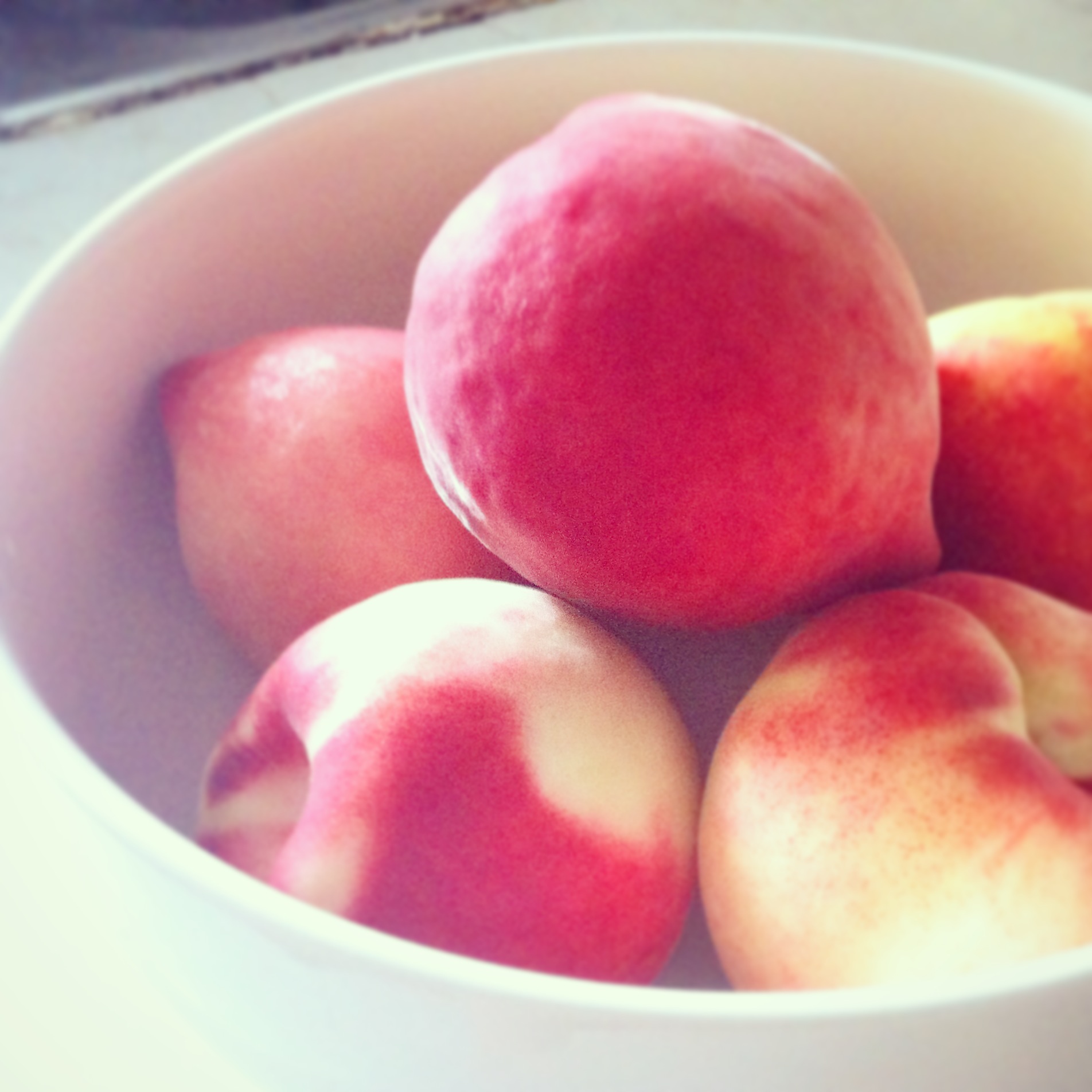
This half-dozen peaches cost 3.8 yuan (about 62 cents). Score!

With trepidation and Boyfriend’s help, I sliced them all up for a peach cobbler. Or eight mini peach cobblers, if you will. The recipe comes from Paula Deen (don’t judge me!) — it requires just the most basic ingredients and tools, which is great when trying to bake Western food in China, but it doesn’t skimp on flavor or texture. It is insanely delicious for such little work. Just cut down on the sugar.
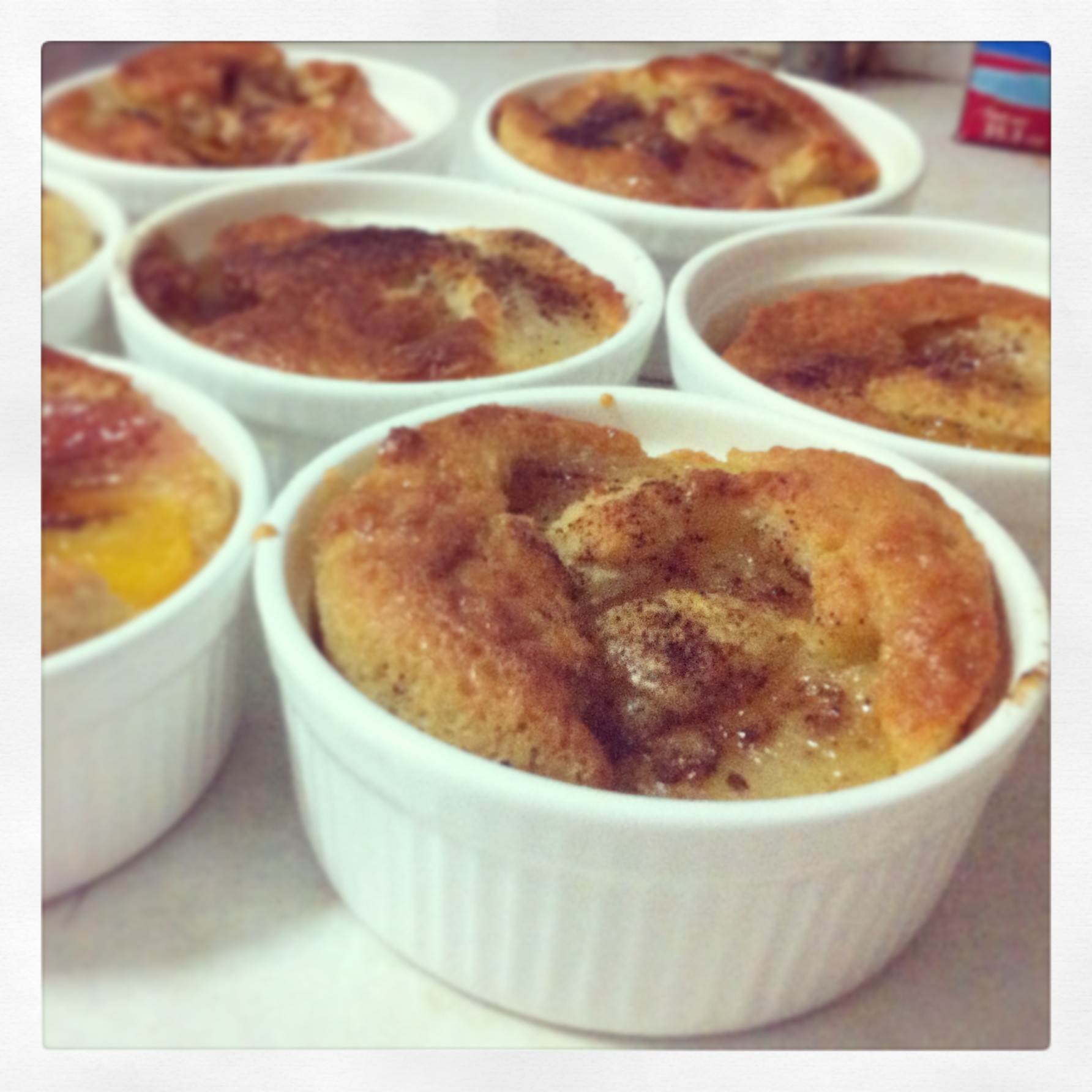
peach cobbler

I wasn’t completely rid of my baking bug, though. While I was at the market buying peaches, I had spotted some delicious-looking purple plums, which I love even more than peaches. And I remembered I had come across a recipe involving plums recently! So the next day, I checked out the fruit stand near my office and managed to find the most perfect plums for this torte. They were soft and ripe, squishy to the touch, but not to the point where they were too fragile to handle. That night, I made the best cake I’ve ever tasted with them. The torte, like the cobbler, is minimalist — just flour, butter, sugar and eggs, top with plums, sprinkle with cinnamon — and out comes a version of heaven so perfectly balanced between sweet and tart, juicy and crumbly, and with a kick of spice.
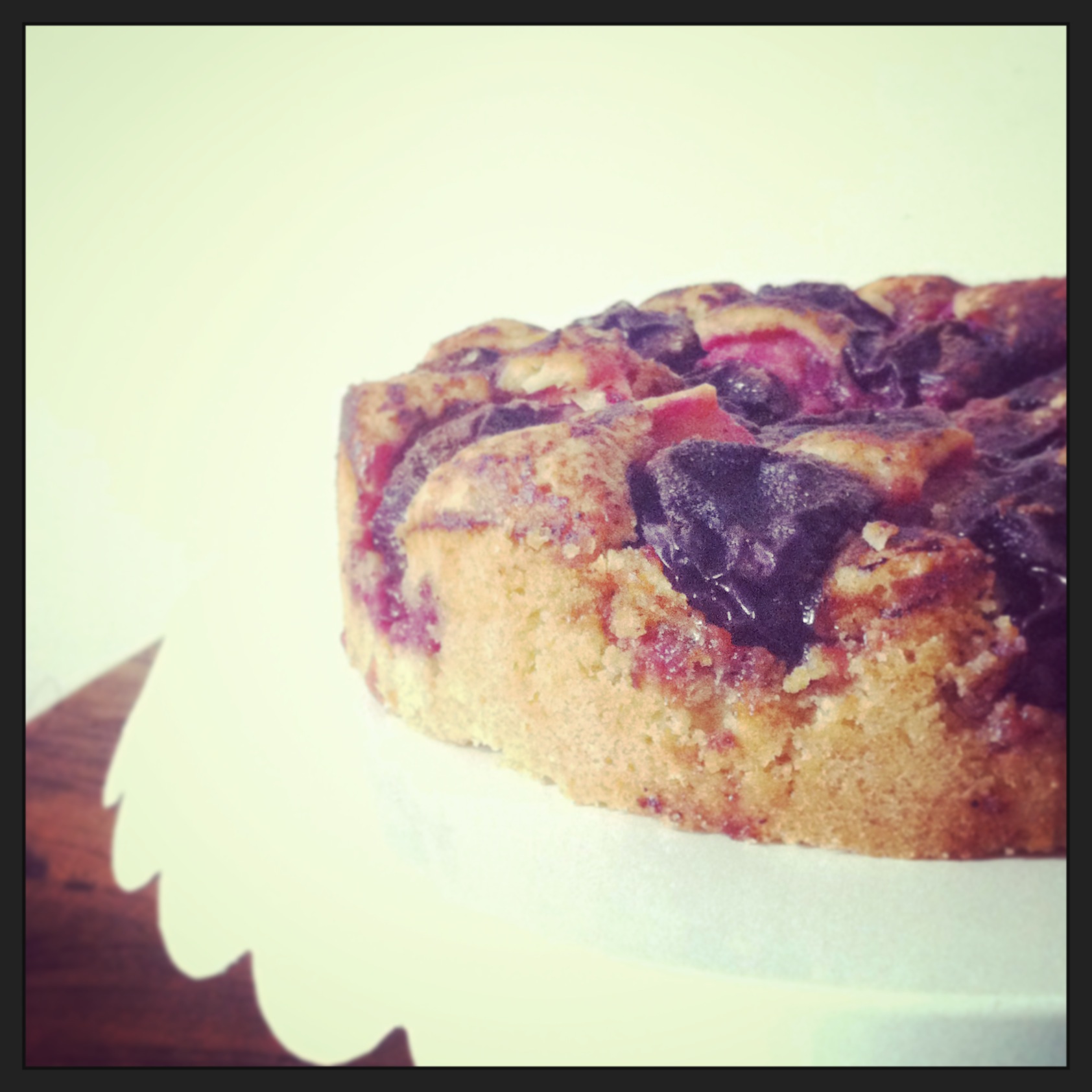
plum torte

The recipe calls for a 9-inch pan, but I only have an 8-inch, so my torte came out more like a cake. I can just imagine a thinner torte with plum juices seeping all the way down into the cake. It’s making me drool. I have to get a 9-inch pan.
US v. China: Hail edition

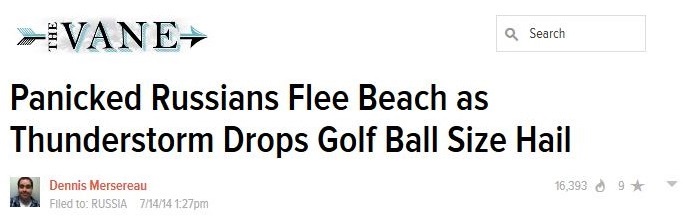
Weather: Everyone experiences it. In addition to our humanity and our egos, it is a common denominator that binds us together. But we also experience it differently. In the case of extremely large hail, we in the United States might compare the size of hailstones to, say, golf balls, as this recent Gawker article did:

Golf Hail

In China, golf is still a rather elitist sport, and at any rate nowhere near as popular as table tennis. When a flash thunderstorm struck a Beijing suburb yesterday, many news outlets reported hail the size of ping pong balls:

Translation: Beijing hit by sudden storm, hail as big as ping pong balls

In case you were wondering, golf balls are 42.67 mm in diameter per U.S. Golf Association regulations, while ping pong balls are slightly smaller at 40 mm per International Table Tennis Federation rules. Hailstones are probably closer in weight to golf balls than ping pong balls, though.

China’s new map

Do you ever get tired of hearing about those South China Sea disputes between China on the one hand and basically every other country in Southeast Asia on the other? Do you ever just want to know who’s right and who’s not?

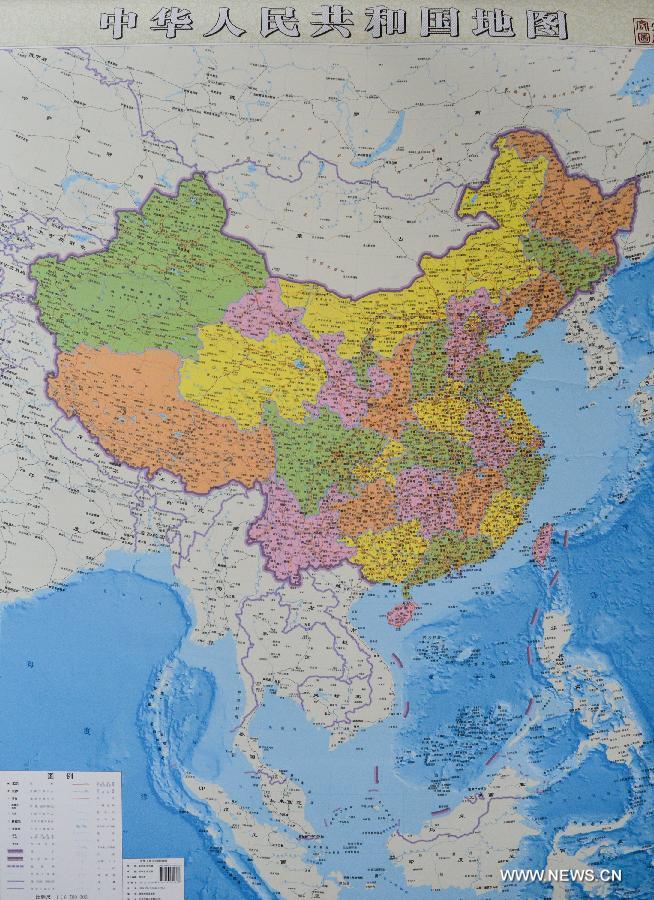
Well, wonder no more: China has drawn a new map of China, in which you can more clearly see that everything belongs to China. Even all that stuff down by Borneo.

Hunan Map Publishing House / Xinhua

Whereas all that water ownership was once relegated to a tiny inset, it has now been glorified to full-scale appendage status. So that the Chinese people don’t get confused about what is China:

“This vertical map of China has important meaning for promoting citizens’ better understanding of … maintaining (our) maritime rights and territorial integrity,” the Reuters article quotes an unnamed official with the map’s publishers as saying to the People’s Daily.

Glad China has finally settled this discussion once and for all.

US v. China: Soccer edition

The World Cup has begun, and my mind has been consumed by soccer. So, in that respect, I direct you to an excellent story in the Economist about the sport and how it is followed/played less religiously in the four biggest countries in the world (by population) than elsewhere. On this front, the United States and China are pretty even.

Though its presence in Brazil shows that America fields a decent national team, there are a number of other sports its citizens pay greater heed to; in India there is another sport so deep in the national psyche that football seems hardly to get a look in. In China and Indonesia football teams from other countries have devoted followings, but the national teams are pretty poor. Neither Indonesia nor India has travelled to the World Cup’s finals in the competition’s 84-year history; China did once, in 2002, but failed to win any games, or indeed score any goals. How can football be the world’s game if nearly half the world hardly plays it?

Exceptions on this scale stand as something of a rebuke to football fans’ declarations of their sport’s planet-encompassing importance. They also show that football has the potential to get even bigger. These countries are “just starting to switch on” to the game, says Simon Kuper, the co-author of “Soccernomics”, a statistical analysis of football. European clubs—the richest and most popular in the world—see lots of potential for growth in the big markets of Asia and have increased their missionary work there. American, Chinese and Indian domestic leagues have seen an influx of cash and have improved as a result.

Both the U.S. and Chinese national teams are something of a joke, almost an embarrassment on the international stage. The U.S. squad is actually a pretty respectable 14th going into the World Cup, though, and has had some proud moments. China sits at 96th in the world and can’t even get into the tournament, overshadowed by its smaller Asian neighbors Japan and Korea. It has more embarrassing moments than proud moments.

But nationally, the top leagues in both countries have been bringing in big names to drum up interest: LA Galaxy brought in David Beckham to a ton of fanfare and New York got Thierry Henry, while Shanghai Shenhua had the biggest two signings in China with Nicolas Anelka and Didier Drogba. That momentary excitement did not end too well for the latter two players or the club.

While these international stars are usually past their prime, they do bring a lot of attention and often help to boost the level of play. Both the MLS and Super League are now gaining traction. In terms of interest, especially historical interest, the Chinese may still have the edge, but I’ve read that soccer is becoming a bigger deal in the States. After many false starts that sputtered out, the MLS appears to be finally catching on back home, a fresh awakening to a sport that seems to have new-found appeal to people looking for something different. In China, the Super League is trying to rebuild itself after decades of corruption and match-fixing scandals. People still deride the organization, both for the poor play and for the mind-boggling mismanagement, but thousands of fans also regularly turn out for each match. According to the Economist article, Super League matches have a slightly higher average attendance than MLS games. As a percentage of population, then, Americans seem much more interested in soccer than the Chinese; but given that a large majority of Chinese still live in rural villages without the transportation or monetary means to go to a match, game attendance may not be an accurate reflection of interest. Soccer games are shown much more on Chinese television: It’s so easy to catch both Super League and European league matches on live broadcast here; even Scottish soccer will begin showing soon.

Anyway, for the next month, I will be waking up in the middle of the night and dragging my ass to the bar to catch the World Cup games live. Some sellers on Taobao are offering official doctor’s notes so people can be excused from work the next day. You, Americans, will be watching during work. I’m honestly not sure which is better.

A weekend in Hebei

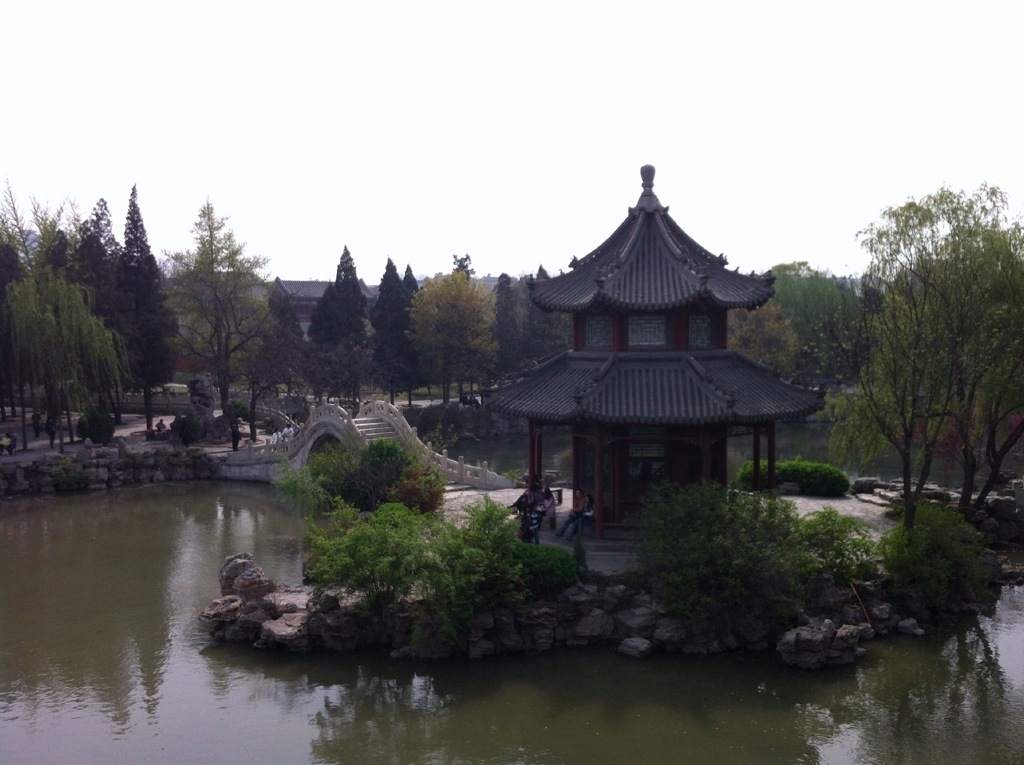
The Ancient Lotus Pond in Baoding.

Way back at the beginning of April, one of our best Chinese friends graciously invited Boyfriend and me to his hometown for a long weekend. He is from Gaobeidian (高碑店), a “city” about two hours from Beijing by bus in the neighboring province of Hebei. I say “city” because even though my friend says it has a population of about 700,000 — about the same as Boston — the atmosphere there feels something more like my hometown, which has a population more than 10 times smaller.

Fun fact: The only movie theater in town closed a few years ago because not enough of the 700,000 residents went, and until very recently, there was not a single McDonald’s (there were at least two KFCs, though). Continue reading

Glimpses of Old Beijing on the ‘Midnight in Peking’ walking tour

Back in 2013, I decided that 2014 was going to be the Year of Reading Books. I had all these books I wanted to read jotted down on random scraps of paper, or in some virtual notepad on my laptop or phone, or on my Amazon wishlist, and I realized that the only way I could get organized was by reading them all. One of those books was “Midnight in Peking” by Paul French, which is the true crime story of the murder of a young British woman in Beijing in the winter of 1937, right before the Japanese invasion. While the unsolved case is interesting in and of itself, the book also provides a snapshot of Beijing itself — the atmosphere, the politics, and a way of life that seems every bit as foreign and exotic to people living in Beijing today as it probably did to Westerners back then.

Beijing in the 1930s was still a walled city and a remnant of the capital city it was under the Qing Dynasty. It lacked prestige and was much overshadowed by Shanghai and even its neighbor, the port city of Tianjin, which were open to Westerners and therefore much more cosmopolitan. While the Nationalists had moved the capital south to Nanjing, foreign governments still operated bases in a small designated area just inside the central southern gate of the city. Most foreigners living in Beijing at the time — mainly government officials or other connected and established persons — also chose to live in or around this area as well. On the other end of the spectrum were poor, stateless people, such as the rapidly growing population of White Russians.

Continue reading

A ban and a cartoon: What is Xi Jinping doing to the Chinese Internet?

With a new week comes a new ban: Four American TV shows are the first to be removed from Chinese video sites in the Communist Party’s latest effort to rein in online speech. While films and televisions have always been tightly controlled, the Internet was almost untouchable, and video sites such as Sohu and iQiyi have been almost a godsend for us laowai to keep up with all the shows from back home — for free.

Now, the State Administration of Press, Publication, Radio, Film and Television is working with video sites to formulate the exact rules about what content they can post. It is still unclear which rules the American shows — including “The Good Wife” and “The Big Bang Theory” — broke, given that they are all relatively innocuous network TV shows. But it is increasingly clear that the government will go to great lengths, lengths it was unwilling to go to before, to “clean up” the Internet. A recap:

The blocking of the shows comes in the midst of a government crackdown on online discourse. Beginning last autumn, the government has warned and punished a number of well-known social-media commentators. It also said it would crack down on the spread of what it says are rumors and personal attacks online. Critics say the moves are aimed at quashing dissent and the discussion of sensitive topics.

Recently, the government has also begun a crackdown on pornographic content online, in an effort that has been more forceful than past campaigns.

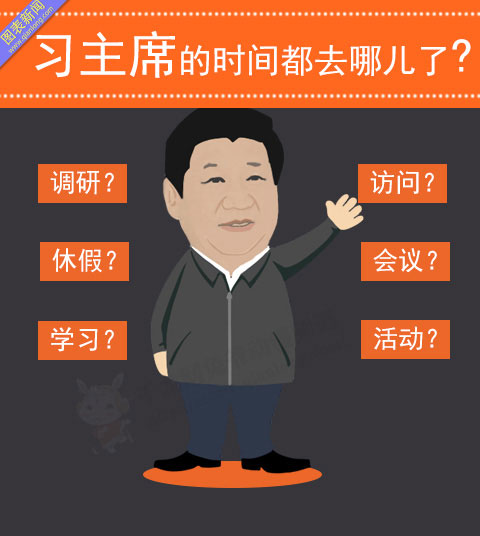
That’s not nearly the extent of President Xi Jinping’s obsession with the Internet, though. Unlike previous leaders, Xi seems to understand the power of the Internet. These online crackdowns go hand in hand with viral media content designed to promote his image, such as this cartoon, the first ever of a Chinese leader to be created and carried by state media:

Originally created by Qianlong.com, the propaganda portal of the Beijing municipal committee of the CPC.

In fact, Xi’s administration seems hellbent on creating a new image for him, the Communist Party, and China through the pioneering use of online tools. His online campaigns through popular web portals rival that of U.S. President Barack Obama. And in a brazenly outrageous show of hypocrisy, all of the major state media outlets — Xinhua, CCTV, People’s Daily, Global Times — have taken to promote themselves (and China) on Twitter and Facebook, which the government has blocked from the Chinese people since 2009. In a recent post, I even pondered whether it was an orchestrated soft power campaign to litter Urban Dictionary with popular Chinese slang (I really wouldn’t be surprised if it is).

So the next time you read about China doubling down on censorship domestically, keep in mind that they are also ratcheting up their propaganda and spreading it across the world. I’m not trying to scaremonger, but it is something to be aware of.

Kenuo Danting SPA Beauty Salon is a sham scam

I hope you enjoyed my three-part story about the time I went to get a facial. I wrote it partly because I thought it was yet another silly China misadventure (still going on them even after living here for almost five years), and partly to reflect on this facet of China — a China that attempts to blend old traditions (holistic medicine) with a modern setting (the faux-chic SPA), where young girls from the countryside can find a job in pampering urban office workers. It also serves as a cautionary tale: While it is no secret that in this rapidly developing nation, get-rich schemes abound and everyone is prey, it’s still possible to fall victim even when you are completely aware of the plot.

Kenuo

Now I will tell you the name of the horrible SPA: It is 香港可诺丹婷国际美颜美体连锁机构 (Xianggang Kenuo Danting Guoji Meiyan Meiti Liansuo Jigou), or 可诺丹婷 (Kenuo Danting) for short, or simply KeNuo in its logo above. Its full name, translated, is “Hong Kong Kenuo Danting International Beauty Salon Chain.” But it is neither a Hong Kong company nor an international chain of beauty salons. It is definitely a national chain, one that is expanding quite rapidly (the SPA ladies are always telling me about new store openings in Beijing). But it is not from Hong Kong, based in Hong Kong, or run by a Hong Kong-er.

Continue reading

The new Chinglish: English adopts Chinese words

The WSJ’s China Real Time blog has a fun article on Chinese words in the English lexicon (there are few compared to other languages, such as French, Italian and Yiddish), based on a Xinhua report about Chinese buzzwords that have made it onto the great linguistic archive … Urban Dictionary. Seriously, the Chinese state media were getting excited about the influx of Chinese terms (probably submitted by Chinese users) on Urban Dictionary. Oh, China, you’re so cute.

(I just had a cynical thought: What if China, which has been trying to increase its soft power, is behind this influx of Chinese terms on Urban Dictionary and then congratulating itself on this “achievement”? In an attempt to boost the credibility of Urban Dictionary, the article notes, “Submissions by users are approved by volunteer editors, and new words or phrases can only be published with approval from more than half of the editors. Definitions are rated by site visitors once published.”)

In actuality, it appears that the Oxford Dictionary already has about 120 “Chinese-linked” words. However, besides ketchup and tea, most of them are probably relatively obscure, unlike rendezvous or capisce or shtick. Anyway, regardless of whether or not we will all be using Chinese words in English one day, all the expats here already do. There are just so many concepts that the Chinese language captures perfectly, such as 麻烦 (mafan), 没办法 (mei banfa) and 差不多 (cha bu duo), as well as others that WSJ readers have readily supplied. I agree with all of them, especially 舒服 (shu fu). I have no idea how to express the feeling of shu fu in English. “Ooh, it’s so comfortable!” Or “Ooh, it’s so nice to the touch!” No, it’s shu fu. My mind literally went blank when I once tried to translate it for Boyfriend. It might just be because I’m bad at translation, but I honestly don’t think shu fu and comfortable are always synonymous.

But the reason we use most of these words and phrases so much is probably because we are immersed in the context of China, which comes with all of its social etiquette and cultural structures, which in turn are so different than what we encountered elsewhere. A foreign term just doesn’t do justice to how we want to describe our Chinese experiences, so we opt for readily available Chinese terms. When we complain about all the hurdles and hoops we have to jump through just to complete a mundane, routine task, it’s not just a hassle, it’s mafan. But too bad, mei banfa. That’s just the way it is; there’s no solution. So, no longer having the energy for precision, we settle for cha bu duo. That’s about right.

I don’t think these short terms, even in pinyin, are necessarily non-transferable to English. Certainly, they will seem foreign at first, and they will always retain their foreign origins; but once people become more familiar with them, their spelling will no longer be an obstacle. Moreover, as the English-speaking world encounters such Chinese contexts more, they will need a term for them. And when they do, they can borrow handily from the Chinese.

Continue reading

Food I can cook: Zha jiang mian, Guinness cupcakes and matcha ice cream

I haven’t been terribly creative since coming back to Beijing after the Chinese New Year holiday. My mind is overflowing with ideas, but it’s hard to have time and not feel lazy at the same time. As such, my culinary experiments haven’t been many. Still, here’s some stuff I have managed to make:

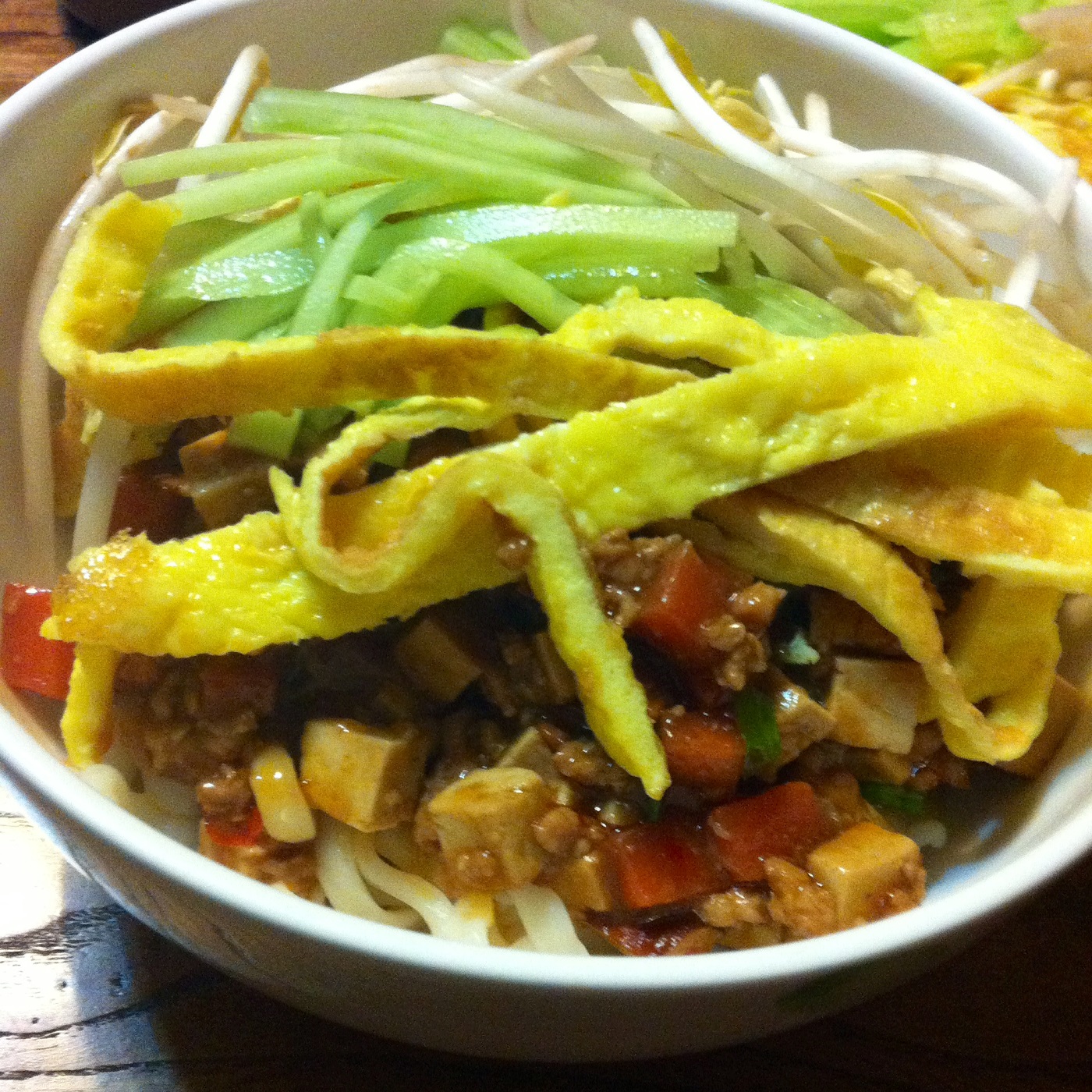
Zha jiang mian

Zha jiang mian. Otherwise known as Chinese spaghetti, this noodle dish comes in a variety of regional iterations, but the zha jiang (which literally means “fried sauce”) is always some sort of bean paste mixed with a little bit of meat. It can be accompanied with fresh vegetables, such as cucumbers, beans and bean sprouts, as well as eggs. It is one of my favorite dishes ever, and my father makes a mean Taiwanese version where he stir-fries ground pork, dry tofu and carrots with tianmian jiang (甜面酱) and douban jiang (豆瓣酱). I tried to copy his recipe here: It ended up far from perfect because I added too much douban jiang, and then I couldn’t add more water to compensate because I ran out of cornstarch. But I was still very proud of my first try!

Guinness cupcakes

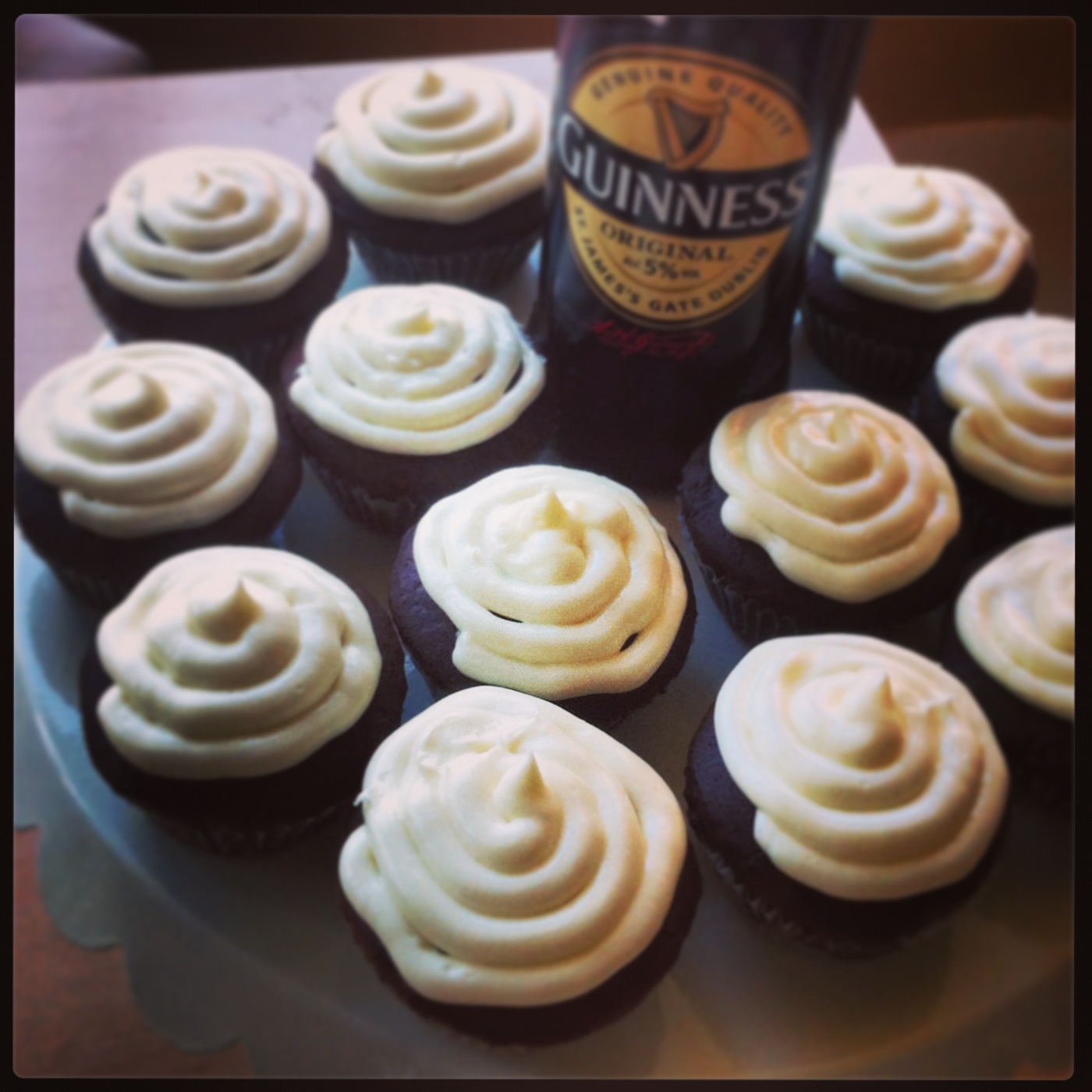
Guinness cupcakes. My sister gave me a cute little cake stand for Christmas, and so I’ve been dying to make a cake. I just couldn’t decide what kind of cake to make! Then St. Patrick’s Day came along. I don’t usually celebrate the holiday, but I love Guinness and I’ve been meaning to try cooking with beer. It was a win-win situation, as the Chinese would say.

Matcha ice cream

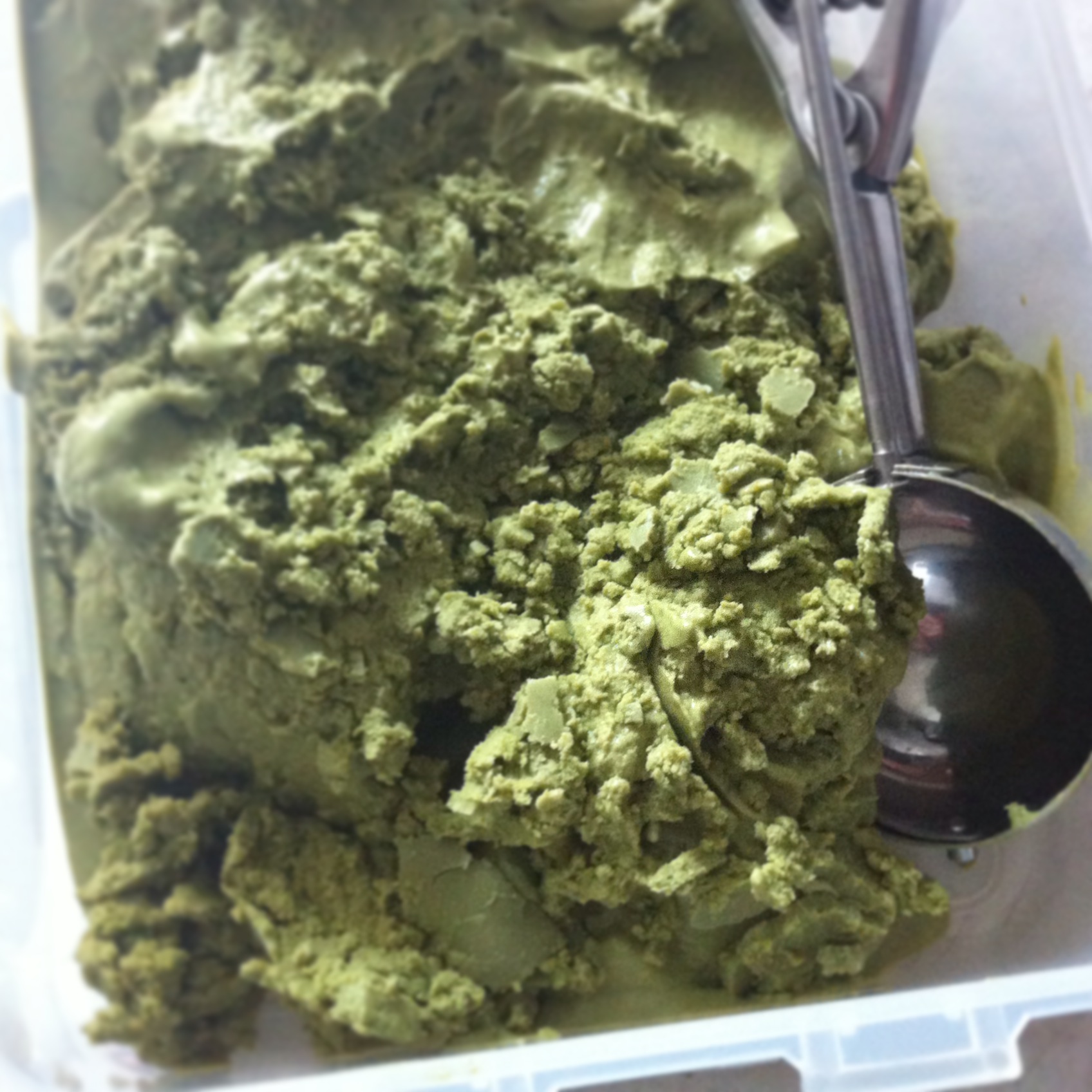
Matcha ice cream. It took me a while to get around to making this easy-peasy (ezpz) ice cream because I wanted to pair it with some hong dou tang (红豆汤, or red bean soup). Red bean soup is one of my favorite desserts (“dessert”), made from red beans that are cooked in water until they have softened and burst to make a nice, thick soup. Sugar is added so it’s sweet, and glutinous rice balls (汤圆, tang yuan) can be added for more fun. My mom made it every year when I was growing up, and that would be how I knew winter was coming. The beans would be soaked overnight before they were cooked, and while they cooked, my mom and I would make the rice balls. Last winter, I made the entire soup myself for the first time. This winter, I never got around to making it and then spring came early. But red bean soup can really be eaten any time of year (it’s delicious eaten cold in the summer), so I got out my red beans and soaked them, thinking I would whip up the ice cream mixture while they were soaking. Unfortunately, the store didn’t carry any matcha. I ended up having to order it online the next day, and it took another day to be delivered. By that time, I’d eaten half of the red bean soup, so now I have lots of ice cream and no more soup :(