That time I went to get a facial, Part III

I signed up for a SPA package. It’s the mistake that keeps on tormenting me. Click to read Part I and Part II.

Fast forward another four months. I’ve been going to my SPA for seven months now, through the winter and into the beginning of spring. Now, I usually try to go once a week after work, though in the beginning I sometimes went twice a week because they were so pushy about it. I sometimes wonder whether I would be willing to go more often if the experience were actually enjoyable. Then I remember that if the experience were more enjoyable, I wouldn’t be pushed to go so often, which means I would actually go as often as I wanted to — which is something more like once a month.

So why do I sacrifice myself to this tortuous ritual? Because I’m a cheapskate. Every time they try to scam me, I vow never to go back. But then I remember that I forked over more than $1,000 to these amateurs, so I am going to get at least some of money back through their amateur services. I still have something like 16 back massages, eight head massages and a handful of facials left — if I did one treatment a week, I’d still have to go for at least the next five months. I am sometimes really tempted to go more often, just to get it all over with, but I don’t think I can deal with them that often.

To be honest, I thought I’d seen it all. It had all become fairly routine. I would go in for a back massage, or switch it up with a different treatment, listen to their stories, answer their questions, bite my tongue when they tell me how unhealthy I am, and generally humor them. It would be just about tolerable, if not enjoyable. At the very least, I would be getting a back massage. But the last time I went, they went too far.
Continue reading

That time I went to get a facial, Part II

I signed up for a SPA package. It’s the mistake that keeps on tormenting me. Read how I got myself into this mess here.

When I went to get my free back massage, my SPA lady was nowhere to be found. Unfortunately, I couldn’t ask for her because I didn’t get her name when she massaged half of my back the first time. And I couldn’t quite remember what she looked like, though I was sure I’d recognize the way she spoke. It turned out not to be a big deal, though, and I was assigned instead a sweet girl named Xingxing, which means “star” in Chinese. I love stars, so I thought it was fate.

Xingxing took care of me and settled me into an unoccupied room, serving me some red bean soup when I told her I hadn’t had lunch yet. It was quite different from my first visit — quiet, calm and almost relaxing. Xingxing asked me about myself and told me about herself as I ate; like the other SPA ladies, she was college-aged, from the countryside and with little education. Her hair was pulled tightly back into a bun, and she was wearing a trace of makeup that enhanced her bright eyes. She spoke with a young girl’s charm, softly and prone to small giggles. Over my next few visits, Xingxing would tell me about her past relationships, life back home, and what she did over the weekend. She showed me photos she snapped of herself after getting dolled up to go out and amusing pictures she made of her friends. After one session, she gave me a quick manicure because she knew I liked to paint my nails. We traded small gifts — I gave her some Western-branded makeup, and she gave me a scarf.

But the young Chinese are a restless bunch, and the turnover at my SPA is somewhat high. Xingxing told me she was going home for a few days because her sister was getting married, but it turned out she was leaving forever. I had been going to get weekly massages from her for more than three months by then, and I was comfortable with her and settled into a tolerable routine. The first time, when I got the free massage, she — or her boss, rather — had talked me into buying a package deal of 10 back massages for RMB 2,888 ($465). It was a ridiculous offer that had been as high as RMB 8,000, but the boss lady talked about how blocked up my back was and how it could lead to some Very Bad Side Effects. She showed me how they used excellent foreign imported products and how much a single massage cost (which actually is about three to four times the cost at any Chinese massage parlor). I told her I didn’t recognize the brand they used, the manufacturing label said it was made in China, and the name sounded like a Chinese person’s idea of a foreign brand name (really, it’s Omar Vigor). I told her I didn’t need to spend so much money on back massages because it’s a treat, not a necessity. I told her everything I could, but she offered to throw in free gua sha* — cuz man, look how much sha I had! — after every back massage. I caved.

It was the worst mistake ever.

Continue reading

China to begin censoring foreign TV shows

In my post on House of Cards, I mentioned that there was very little censorship of foreign TV shows in China; licensed websites have most shows people want to watch from back home available for streaming as soon as they air. It seems that officials at the State Administration of Press, Publication, Radio, Film and Television may no longer allow this to go on so unrestricted anymore, though details of what will be censored and how remains, of course, unknown.

That time I went to get a facial, Part I

Every laowai in China makes a few mistakes here that he will regret forever. I’m not talking about major things like not learning enough Chinese or not immersing oneself in the culture enough — just daily decisions we wish we hadn’t gotten ourselves into. Mine is when I signed up to join a SPA. And then signed up for even more services. And then went to get a facial. I’ll start at the beginning.

One hot day last summer, I was walking back to my office after lunch, when I was stopped by a short, port man who asked me to fill out a survey. Being pressed for time, I waved him off, but he grabbed my arm and pressed on. “Only a few minutes, and then you can receive a gift card for a free treatment of your choice,” he said.

I tried the “I don’t understand Chinese” card.

“But you look Chinese! And you speak so well!” He pointed to his survey. “Can you at least understand this word?”

It was the only English word on the survey. It was, in all caps, SPA.

Why couldn’t I have just said no?

I sighed and started ticking off boxes while he asked me about where I was from and what I did. I handed the survey back to him and tried to collect my gift card, but he started directing me toward the building. “You have to go up to get it,” he explained. This was totally not the deal. I should have just walked off.

But I didn’t.

Continue reading

Bye-bye, banana: Sensationalism v. racism in the Chinese press

Gary Locke. I mean, a banana! No, Locke. Banana? / Wikipedia
Gary Locke. I mean, a banana. No, wait, Locke! Banana? / Wikipedia

The other day, a major state-owned media outlet published an opinion piece that basically was just a gleeful trashing of Ambassador Gary Locke as he departed China and his posting here. The article focused on the fact that Locke, a Chinese-American who arrived in China in 2011 to great fanfare and admiration, actually turned out to be a “huang pi bai xin” de xiangjiao ren (“‘黄皮白心’的香蕉人”) — a yellow-skinned, white-centered banana person. Yes, this major media outlet called someone a banana.

Continue reading

Happy in Beijing

Every so often, a new music video for Beijing — from Shin’s One Night in Beijing, to the 2008 Olympics anthem Beijing Welcomes You, to last year’s Beijing State of Mind —  crops up to showcase the culture and various lifestyles in our fair city. This latest one, by Stephy Chung, is by far my favorite. Shot last weekend in the middle of a particularly miserable stretch of hazardous air pollution,* the video shows just how bleak and depressing Beijing is this time of the year. People are hunkered down in their giant coats and everything looks dead and gray. The smog certainly doesn’t help. But, as I’ve said before, this city — this country — operates on dichotomies, and often something and its opposite are both simultaneously true. The way people dance, sing and laugh to Pharrell Williams’s “Happy,” along with the snapshots of everyday life, is the perfect contrast to the demoralizing nature of Beijing winter. The video itself is uplifting and infectious, a fitting ode to this shitty city.

* An evening rain on Wednesday washed it all away, and strong winds the following day meant that we had a brief reprieve of blue skies on Thursday. But now that it’s Friday, we’re back to unhealthy pollution levels and rising…

On ‘House of Cards’ and China

So I figure by now, everyone has seen the second season of “House of Cards,” or at least enough that you know that China plays a big part in the season’s storyline (definitely more than Kate Mara did). And by big, I mean that Kevin Spacey had to deal with basically all of the issues you’ve seen in the headlines about China from the past year (except air pollution) within the span of 13 one-hour episodes. I’m not all that bothered about how China was portrayed because the show is basically about how horrible powerful people are, and it appears that the Chinese government isn’t all that bothered about it, either: As this WSJ article points out, it’s available for streaming uncensored here in China (and for free, too!).

This is pretty significant because, as we all know, China is very sensitive about its image. That’s not to say that anything negative will be automatically scrubbed once it gets within China’s borders, but any media content for public consumption will be scrutinized at some level, especially if it will reach a wide audience. “House of Cards,” as the article notes, was the most-watched U.S. show over the first weekend it aired, and the second season’s episodes have about 9 million combined views so far. Factoring in the first season, from March 2013, “House of Cards” has been viewed 24.5 million times. While well short of Chinese hit series (1 billion views for one popular reality show), 9 million is still a lot of people. Moreover, it’s airing at a time when U.S. movie studios are self-censoring their films (for things as minor as suggesting that a plague originated from China to as major as changing the nationality of the villains) so that they can be shown in China and draw a larger crowd.

Western media, quoting some Chinese viewers, have expressed surprise that the show is allowed to be shown. So what gives? One person quoted suggests that Wang Qishan, a top-ranking government official, is the reason — Wang is a fan of the show. Another reason, brought up in the WSJ article, may be that online video streaming just isn’t as heavily regulated as, say, foreign films. In fact, Internet censorship falls under the purview of multiple government departments, and video streaming is new enough, so it may just be that government officials are unsure of who has jurisdiction.

But is there even anything to censor? Continue reading

China cliches and the power of propopanda

Benjamin Carlson recently made a list of five Communist Party catchphrases commonly used in writings on China. They are:

  1. Referring to China’s “century of humiliation”
  2. Crediting the government with “lifting hundreds of millions out of poverty”
  3. Needlessly referring to China’s “5,000 years of history”
  4. Calling China’s supreme leader “the president”
  5. Referring to free thinkers as “activists” or “dissidents”

For the most part, all major publications, as well as this blog, have made use of these narratives, while any discussion on China is usually framed around them. They aren’t necessarily untrue, but they are a bit disingenuous and, as Carlson notes, politically charged. These terms are repeated over and over in China, by China, in both domestic- and foreign-oriented content. As an editor, they drive me crazy because not only are they often irrelevant to the story, they are repeated so damn often. Can’t the government find something else to write?

In a land of 1.3 billion unruly individualists too busy with their own lives, it is amazing how deeply ingrained some of these notions are when other more practical ideas, such as public courtesy and traffic laws, aren’t. In fact, it’s probably the best example of the CPC’s power and what they can do if they really, really wanted to. This is the image of China that China is pushing, and it’s even seeped into our own writings on and understanding of China. Which means, we’ve all drunk the Kool-Aid.

My Not-to-Do List to be more like a horse, less like Edward Snowden in 2014

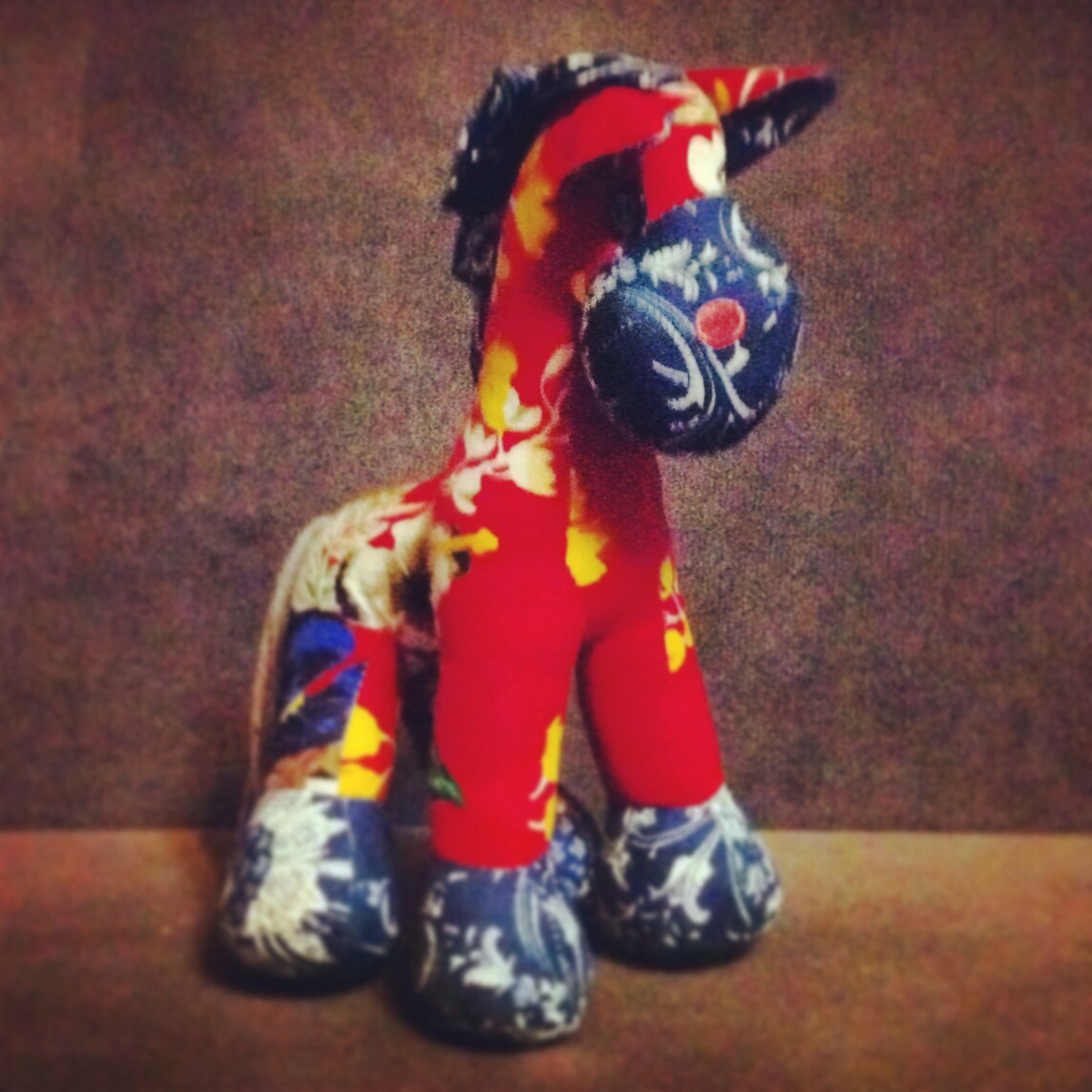
It's your year, pony!
It’s your year, pony!

2014 is otherwise known as the Year of the Horse. Horses are remarkable creatures, full of symbolism and stuff, so why not act like a horse in the Year of the Horse? Edward Snowden, who “used to have a good job in the security business,”* is not like a horse. It would have been better if he had “left and kept his big mouth shut.”*

So here is my list of things to not do in 2014 so that I can be more horse-like, less Snowden-like.

  1. Be a traitor. Horses are known for their loyalty; Snowden is known for his disloyalty. Enough said.
  2. Talk too much. Horses don’t talk — they are horses. Instead, they use body language (“lifting of the ear, a swish of the tail, a flaring of the nostril or hoof stabbing at the ground”) and sounds (neigh). Snowden not only talked, he blabbed to people like Glenn Greenwald, who talked (and wrote) some more. Neigh, do not talk.
  3. Not “face the music.”* Snowden ran off to China, then ran off to Russia, and then tried to run off to Ecuador. Horses run too, but only to where you guide them to run. If you can’t not do No. 2 (talk too much), then at least stay and face the music. You know how horses face the music? They get slaughtered.
  4. Ignore culture. Horses “remind us of the importance of culture” because they are part of a lot of myths. Snowden ignored the NSA’s — and the US’s — culture of spying and secrecy. For this, he was exiled to Russia.
  5. Not have charisma. Horses “know a lot” about charisma, whereas it’s hard to like Snowden because even though he’s dropped a giant bombshell regarding the government’s invasion of everyone’s privacy, no one cares because he doesn’t have any charisma.

(This list was inspired by three opinion pieces by two Westerners that Boyfriend and I had to edit recently. Starred quotes were unfortunately taken out of the final copy because, let’s face it, gems as they are, they just don’t belong. Happy New Year!)

It’s the return of the airpocalypse!

Ahhhhh!!!!
Ahhhhh!!!!

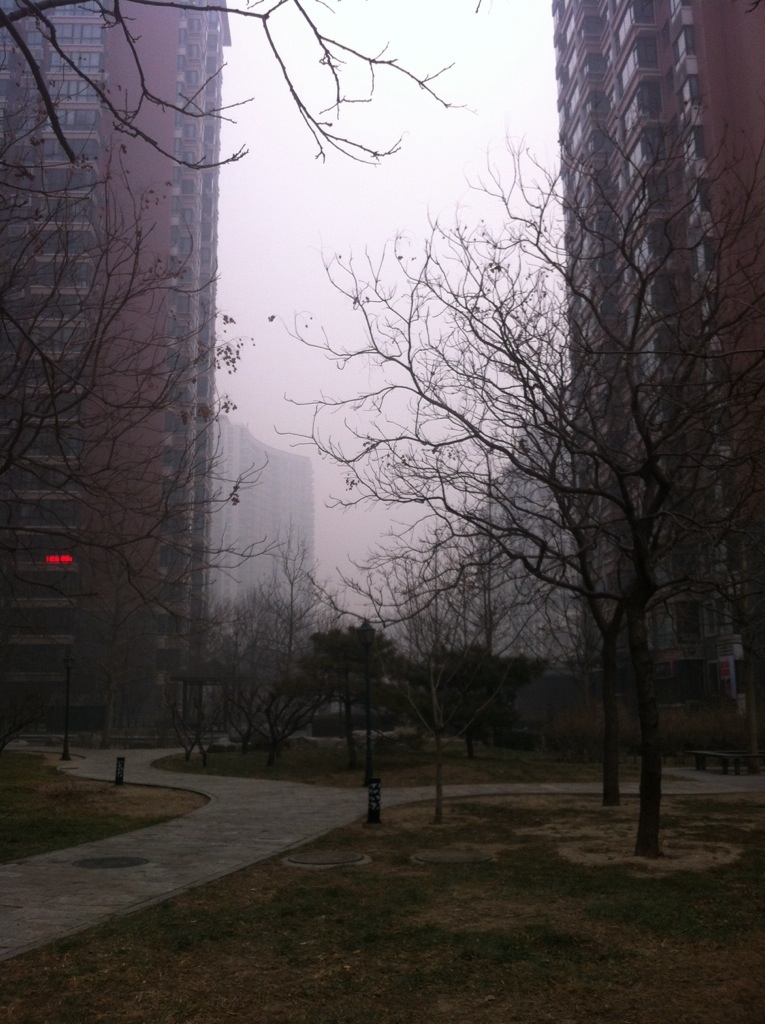
You may remember the Great Smog that kicked off 2013, an entire month of days that looked like the above picture. It was dubbed the airpocalypse after a giant cloud of smog blanketed much of northeast China and sent Beijing’s air quality index soaring to almost 800 (just a few years ago, the air monitor couldn’t even read past 500).

More recently, it has been applied more to air problems in the northeast and further south around Shanghai.

In Beijing, this winter has so far been less apocalyptic. Last month, officials were even touting improvements in air quality. This was based on the fact that in the month after the city’s winter heating was turned on, the number of seriously polluted days fell by more than half over the same period last year (from seven to three). Also, the four major sources of pollutants, including PM2.5, fell by 25%. The Beijing News article credits this air quality improvement to various measures city and district officials have taken over the past year, such as converting houses from coal to electric heat, installing clean technology at coal-fired boilers, and taking high-emissions vehicles off the road. But in my opinion, it has helped that it hasn’t been so cold this winter — we haven’t even turned on the heat yet (though most apartments in Beijing have centrally controlled heating) — and there has been a fair bit of wind from the north.

And yet, here we are, with an AQI of 578 this morning (when I snapped the picture above, a little before 9 a.m., it was down to 521). In all fairness, the AQI has been on a roller coaster these past few months, with some days going as low as 30 to other days reaching 350 and beyond. 578 is the worst I’ve seen in a while, but after last winter (and spring), I just really hope today isn’t a sign of what’s to come.