Beijing’s latest retaliation against Norway

Remember that time back in 2010 when Norway — I mean, the Nobel Committee — awarded Liu Xiaobo, a Chinese human rights activist, the Nobel Peace Prize? And China reacted by canceling high-level meetings, calling off a Norwegian musical, and denying visas to visiting dignitaries. It stopped buying Norwegian salmon. It excluded Norwegians from their new 72-hour visa-free policy.

But worst of all, it didn’t invite the Norwegian Embassy to the next Experience Beijing* event. A source close to the event organizer (i.e. Boyfriend) said that every other embassy in Beijing except Japan received an invitation in person.

Neither side has confirmed the apparent snub, but well … Norway meddling in China’s internal affairs: Never forget.

* Beijing Salon: Experience Beijing is a series of cultural activities that aims to introduce “foreign friends” to traditional Beijing culture, such as kites and Chinese knots. It is run by a tangential arm of the Beijing municipal government. The upcoming program, I’m told, focuses on Spring Festival temple fairs. It’s a very exclusive event, so I can’t find any mention of it on the Internet.

2013, reviewed

Now that it’s a new year, we can look back on the old year!

The main question is, of course, how many blue sky days did we have? According to statistics for the year released by the Beijing Environmental Protection Bureau, which ranks each day from 1 to 6 (highest level of pollution), 176 days in 2013 were considered Level 1 or 2, with low enough pollution to be counted as a blue sky day. But in my experience, Level 2 can already have some haze, so really only the 41 Level 1 days should count. So there you have it: 41 days — or less than 1.5 months — of blue skies in 2013!

2013 pollution was basically on par with 2012 pollution, though, which means that the calls to action in 2012, in which public outcry led to the government to be more forthcoming about the air quality, were rather anti-climactic. I tell you, it’s a major disappointment given the many inventive strategies officials came up with to reduce pollution.

2013 is also the year that the slogan “China Dream” became a political tour de force. After the stuffy Hu Jintao years, the leadership change was self-willed into being a breath of fresh air, carried far and wide by this government-sanctioned notion. China’s new president, Xi Jinping, decided to make it the hallmark of his administration, and thus a catchy new template for all future propaganda was born. Xi outlined what he determined was the China Dream, and then everyone began to overanalyze what exactly the China Dream is.

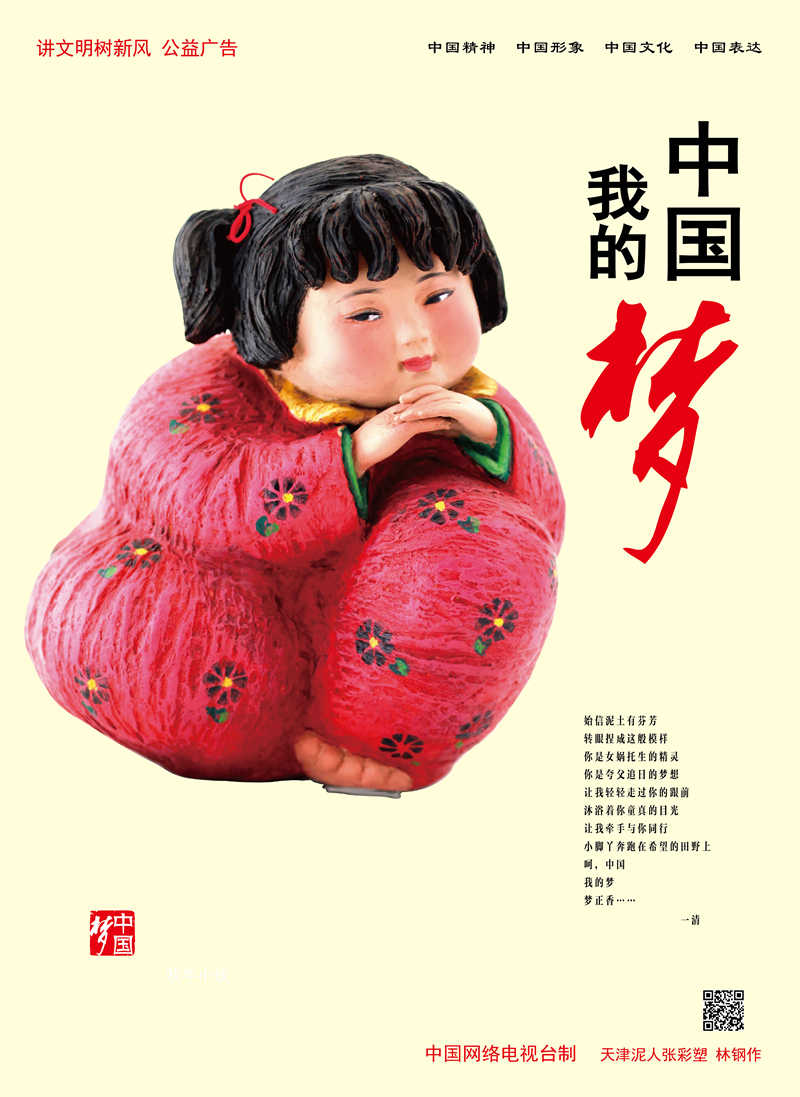
"China Dream. My dream."
“China Dream. My dream.”

On the law front, China’s new entry-exit law went into effect over the summer, making it much harder for both tourists and workers to come to China. The government also cracked down on Internet rumors in the name of social harmony, but the new threshold for constituting a crime has instead (and not surprisingly) led to a chilling effect, albeit a successful one, on free speech. More recently, China rolled back two of its most notorious social policies: its one-child policy and its reeducation through labor system.

Finally, on the personal front, 2013 was mostly a year of trips. I visited six new places, three in China and three Asian countries. I revisited Suzhou. And I even had time to spend a couple of weeks in the U.S. I read five books and made it halfway through two others. I learned how to make poached eggs, ice cream and ice cream sandwiches.

It was a good year.

This is why Chinese English-language media need foreign editors

A normal rape case has become a social and entertainment event in 2013.

A normal rape case has become a social and entertainment event in 2013.

A normal rape case has become a social and entertainment event in 2013.

More info here: NYT, WSJ, and for good measure, Daily Mail.

(Obviously the writer did not intend to normalize rape cases or call rape “entertainment.” Just pointing out how mistranslations stemming from differences in how we use our respective languages can sometimes produce shocking and amusing results.)

Solo in Singapore

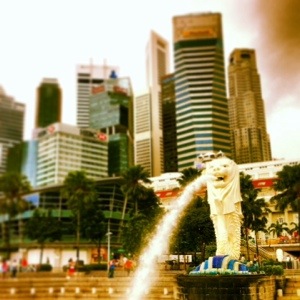
So this past weekend, I went down to Singapore all by myself, and if there were ever a place for a small young woman to to go by herself for the first time, it’s Singapore. I’ll admit: Before I went, I was nervous at the thought of being lonely and alone in a place I’d never been before, but Singapore immediately felt familiar. It’s a big Asian city with skyscrapers, water and a metro. In fact, it felt like a mix of Hong Kong and Kuala Lumpur. There was the distinct imprint of the British — left-side driving, a penchant for orderliness, a population that is majority ethnic southern Chinese — combined with a Southeast Asian tropical melting pot. The sheer cultural diversity, set against a familiar backdrop, made for a great solo excursion. Singapore is small enough to feel safe, but big and diverse enough to offer some chances for discovery. It is convenient and accessible, with just enough people to feel as if you have your back covered, but not so many people that you lose your privacy. As with my trip to Busan, I only got a glimpse of the city, so I can only make a few quick observations. I hope they aren’t too far off the mark:

It rains a lot. Obviously — it’s in the tropics, plus having been to the Philippines, Taiwan, Hong Kong and Kuala Lumpur, I know it tends to rain in this region. Actually, it rains about 178 days a year in Singapore, and November and December are the rainiest months. So I anticipated the rain; I just thought it was going to be less downpour and more intermittent showers. Also, how can one be prepared for so much rain after living in the Beijing desert (it only rains on 70.6 days each year here)? I bought a rain jacket and waterproof backpack just for the occasion, but unfortunately I still couldn’t go out to Pulau Ubin on my last day for a more rural island cycling expedition. Instead, I discovered a rather nice exhibition of Southeast Asian art at the Singapore Art Museum. So I can’t say all was lost.

Go on the Night Safari. Some people don’t like zoos (for good reason), but I think they have the potential to do more good than harm and thus could be seen as a necessary evil. The Night Safari, in my opinion, fulfills this potential. My sister recommended it to me, and it was so much fun! At the Night Safari, you are all alone, in the dark, surrounded by a bunch of wild animals. They could eat you, especially if they are a lion or tiger or hippo. This is because they aren’t caged in as they are in some other, lesser zoos. The tram ride adds to the safari feel. Anything can happen. Anything did happen. Maybe the dark made everything seem more natural, but you can see the pains the zoo has taken to make the animals feel at home.

A fine city. Singapore may be a tiny city state, but it makes the most out of its limited resources. It’s in stark contrast to Fujian province in China, which I bring up because I was recently there and because many Singaporeans are ethnically Hokkien or Hakka. These groups, especially the latter, have long been some of the poorest people in China. To see the fates of those who have remained in China and those who have managed to chuqu (出去, literally “to go out,” means to migrate from one’s ancestral village to a bigger city for more profitable work) was an exercise in the realities of immigration. Though China has gained lots of ground, its standard of living is still nowhere close to that of Singapore. But as the Chinese do everywhere, they’ve managed to hold onto their traditions and culture even so far from home. I suspect this is true for the many Indians and Malay in Singapore as well.

Singaporeans are crazy about Christmas. Perhaps a cultural leftover from its British days, the Christmas season seemed to already be in full swing when I arrived at the end of November. Everywhere I went were signs of Christmas. Even Singapore Air had decked out the plane cabin with wreaths and played Christmas songs during boarding and landing.
The intersection of US and China at Thanksgiving

Was your Thanksgiving missing a little something this year? Was that something a pecan pie? Well, apparently you can blame it on China! According to the New York Times, it’s a bit difficult and more expensive to get your hands on pecans this year in the U.S., not least of all because of the Chinese people’s insatiable appetite for pecans:

A rare collision of ill-timed rain, marauding animals and a growing love affair between the Chinese middle class and the pecan has resulted in the worst pecan supply in recent memory. As a result, grocery store prices are up by about 30 percent, which is causing Thanksgiving bakers to think twice about their menus. …

In the mid-2000s, the market for pecans in China began to grow rapidly. China now consumes more than a third of the American pecan crop, a development that followed the country’s inclusion in the World Trade Organization in 2001. …

They are sold by the bagful and are particularly popular around the Chinese New Year, which is coming in January — earlier than last year, and soon enough to elbow out the Thanksgiving nut supply.

We hear a lot about the rise of China and increasing competition for scarce resources. Who’d have thought that this would extend to something that is so small, and yet is such an important piece of Americana? First, they took our jobs, then they took our money, now they’re taking our pecan pies on Thanksgiving!

Despite this apparent tragedy, I hope everyone had a nice Thanksgiving at home (not the mall). Boyfriend and I both had to work overtime, but then we enjoyed some leftovers from our earlier celebration. Now it’s all things Christmas until the end of the year!

Weekend fun: Pomegranate frozen yogurt

In China, street-side hawkers are ubiquitous, selling everything under the sun — Tibetan jewelry, notebooks, phone cases, socks, stuffed animals, candles, candy. There are the usual items, but every once in a while, something new will pop up, everywhere at once. You’d think there was some central management directing all of these sellers to go forth and sell this particular product. This year, it was fresh-squeezed pomegranate juice. I first saw it in Sanlitun, then outside my apartment and office. At RMB 15 ($2.50) for a roughly 12-oz bottle, it is about the same price as a bottle of that POM Wonderful stuff in the U.S., except it’s completely fresh and not from concentrate.

So finally, one day, I bought a couple of bottles to make some pomegranate froyo. I’ve made dairy-free ice cream and ice cream sandwiches, but never frozen yogurt — even though yogurt is everywhere in China and pretty much the only dairy the Chinese consume. I had a little trouble turning my fresh pomegranate juice into syrup (I cooked it with sugar for forever but it never became thick!), and I forgot to account for the tanginess of Chinese yogurt, but I think my first foray into froyo turned out OK. It is definitely tart, with a hint of pomegranate, and it’s such a pretty pink color! I actually made this last week, but only got around to giving it a photo shoot this weekend:

Jojo's froyo.
Jojo’s froyo, available at your local Jojo’s Froyo and Mo’.

November updates

It’s been a busy month, guys, from planning a visa run and planning a trip home to planning what to wear to Boyfriend’s first fight and planning Thanksgiving dinner. Now that all of that is over with, I can tell you what happened!

  • For my next visa run, I’m going to Singapore! I found a hella cheap ticket from Tianjin, but unfortunately the price went way, way up before I could buy it. I should have planned to go somewhere else, but by then, I had decided on going to Singapore. So I bought a more expensive ticket … on Singapore Air! Did you know Singapore is a 6.5-hour flight from Beijing? I could fly to from CLT to SFO in 6.5 hours. That’s a lot of luxury-flying-on-Singapore-Air time.
  • I’m going home for Spring Festival! This will be the first Spring Festival since I moved to China where I actually do the Chinese thing and go home.
  • Boyfriend is an undefeated boxing champion! I had to pay megabucks and dress up all nice just to be able to see him fight. And because he was the eighth match of the night (out of 11), there was a lot of time spent being close to tears at the thought of him getting potentially mauled by a tiger in front of 450 people. Alas, everything turned out OK (and even better because he won!). And he was so good, he didn’t get beaten up! Here he is in his first fight ever, in Communist red:
Boxing Boyfriend!
Boxing Boyfriend!
  • And finally: We are celebrating Thanksgiving early this year! Because I’m going to Singapore next weekend, we have to have dinner tomorrow. It will be the first time several of our friends have ever seen a whole turkey before. I will also be the only American.

US v. China: Journalism edition

Is it time to write this post?

The recent Bloomberg News controversy — that reporters in China have had their stories spiked because it would mean bad news / loss of money for Bloomberg LP — is making waves because it reneges on two of the most important tenets of Western journalism:

  1. Maintaining independence: “Independence” in journalism used to mean that you are not beholden, or loyal, to any person or organization. These days, it’s becoming to mean that you are not beholden to money and moneyed interests. You are supposed to serve the truth and the greater good. But how do you report the truth when all the people with money these days seem to have a different agenda? Even journalism needs funding.
  2. Creating transparency: Like moneyed interests, those with power work best by keeping things in the dark. Journalism is there to shed some light on things.

Enter China, a very mysterious land whose inner machinations are buried deep beneath the surface, but also a place so flushed with cash and with a definite agenda. Can journalism operate in such an environment? It has seemed less and less likely over the past couple of years, as several reporters have not been able to renew their visas and media websites are blocked. But before, at least it was China blocking journalism. Now, it’s a media company doing it to itself, all for the sake of appeasing the Chinese government so it can maintain profits. Journalism may be losing out all the time to corporations in the U.S., but capitulating to China? China’s our frenemy! It needs to be watched more than the corporations, or something.

Continue reading

Expats love China most

Or so this survey says. The Wall Street Journal reports:

[China] ranked No. 1 overall among 37 countries as a destination for expats in an HSBC Holdings PLC survey released earlier this week, edging out Germany, Singapore and the Cayman Islands. Its surveys ranked China No. 2 out of 37 countries in terms of beneficial economics and No. 3 in terms of what the bank calls “expat experience,” or general quality of life.

The survey questioned just over 7,000 expats, HSBC said. Of that group, 71 were in China, and judging by the results they had plenty positive to say about life in the Middle Kingdom. Nearly half praised China’s better work-life balance compared with what they experienced at home, 56% said the quality of education was better, two-thirds said it was an easy place to make friends, and nearly three-quarters said their children were safer than they were at home.

I would also say that China has an excellent lack of spiders and great travel opportunities. But having lived only in one country outside the U.S., I don’t think I can definitively say China is the best. I can vouch for the perks of living in China, though, and do generally agree with what the people surveyed said about it. There are few countries in the world where you can instantly obtain a certain higher status just by virtue of being an outsider. There are probably even fewer countries in the world where you can earn double the average local wage for doing very little work and have money left over to spend on hobbies. Add to the fact that (at least in major cities like Beijing, Shanghai and Guangzhou) there is a sizable enough population of people in the same expat boat as you that a whole community of expat-oriented services has cropped up, and you pretty much have the reason why expats love China so much. You can feel like you’re in a different country, and yet, like you’ve never left home. And not only did you not leave home, you’ve suddenly become the king of your home. Make no mistake, that higher status — imposed on us by the Chinese and willingly accepted by every expat — may prevent us from ever becoming “at one” with China, but it is a powerful drug, half opiate and half amphetamine, capable of such wild intoxication that we cannot leave the country, even as we bemoan the pollution and crowds and filth and rudeness and threats to our health and safety that we aren’t even used to worrying about. Because when you think about it, logically, China is a horrible place.

Continue reading