There’s a whole book dedicated to mac n cheese!

I repeat: There’s a whole cookbook of macaroni and cheese recipes.

Wow!

It is called Melt: The Art of Macaroni and Cheese. It came out last week.

Cover photo from the official website at meltmacaroni.com.

I love macaroni and cheese. It’s pasta and cheese. How can it go wrong? And with all the different cheeses and pasta shapes out there, there are plenty of ways to get creative with it. Here is my personal recipe:

  1. Choose pasta (not a noodle kind). Cook it.
  2. Choose cheese(s). Grate.
  3. Choose vegetable(s). I like leafy vegetables with my mac n cheese, such as chard, kale or spinach, but chunkier veggies, such as carrots, broccoli and those kinds of things, are also great!
  4. Choose meat, maybe, such as a nice sausage or ground beef/pork. This is really optional, as you don’t always want to make your macaroni and cheese too complex!
  5. Choose spices. Go for ones with a kick, such as paprika, allspice or cumin, but do NOT overpower the cheese. The cheese is the best part.
  6. Gather your milk, butter and breadcrumbs. Chopped garlic and/or onion can be nice as well.
  7. Cook and bake!
  8. Eat it all! Just try to stop yourself!

Because it’s such an easy thing to make that is largely based on taste, I’m not sure there needs to be a whole book dedicated to it. But, as I said, I love macaroni and cheese, so I really want to see what’s in the book. As with any pasta dish, I rarely ever make macaroni and cheese the same way twice. However, there is one recipe, called Double-Dutch Mac and Cheese with Chard, that I hold onto because it probably has the best ratio of simplicity to deliciousness.

I am very sad that the cost of making macaroni and cheese (or ordering it in a restaurant) in China is almost prohibitively expensive.
Weekend fun: Pumpkin ice cream and more star cookies

Temperatures dropped pretty quickly at the beginning of the month, but compared to other years, it’s still been pretty mild — a bit nippy in the morning, but I haven’t needed my winter coat yet. As such, it has been easy to deny that fall is here, upon us, even though my local market is filled with fresh autumnal produce: persimmons, pomegranates, pomelos, pumpkins (and they all start with ‘p’).

In a way, I’ve actually been waiting for fall to finally get here. I’ve had a leftover can of pumpkin from Thanksgiving last year that I’ve been waiting for an opportunity to use. While fresh pumpkin (called 南瓜, nangua, in Chinese, meaning “southern melon”) are in abundance year-round in Beijing, I’ve never been one to go through the trouble of scooping out pumpkin insides and pureeing them, especially when canned pumpkin is so readily and cheaply available in the U.S. Not so in Beijing, however: Each can now sells for about $4.40 (up from $3.70 last year). So I really wanted to make the most of this can, which meant I had to wait until fall, the best season for pumpkin.

But what would I make with it? I’ve already made various types of pumpkin bread, pumpkin muffins, pumpkin pie, pumpkin mousse, pumpkin cheesecake, pumpkin pots de creme — what else is there? Ice cream, obviously. The best treat in the world, especially if you’re in denial that summer has ended.

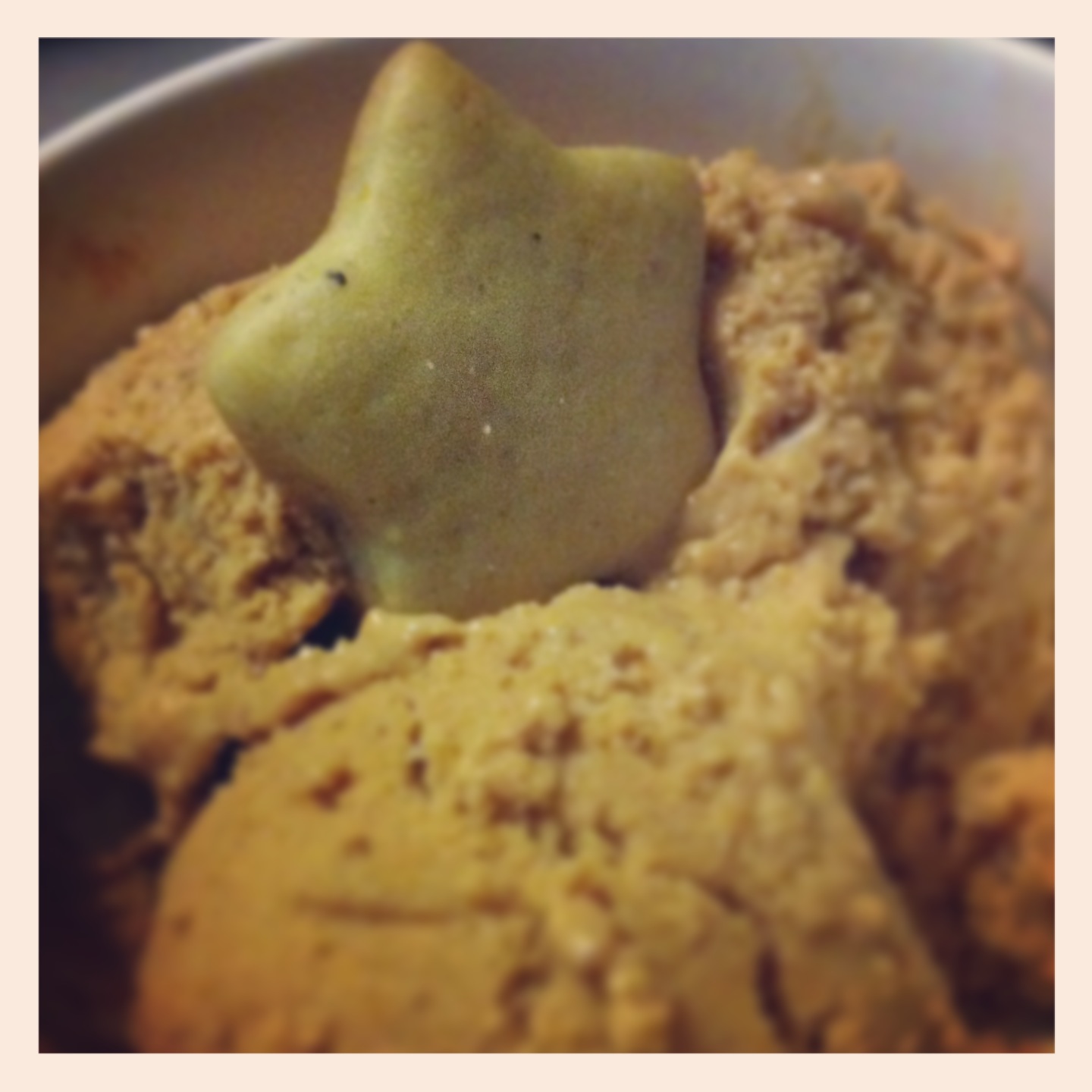
Creamy, spicy pumpkin ice cream.

I also made some orange cardamom star cookies.

Rubber Duckie, you’re the one!

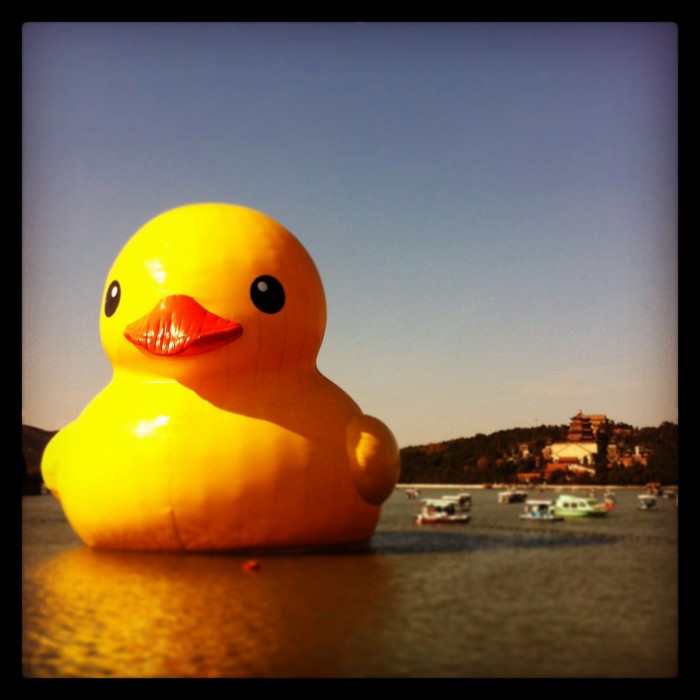
When I was a tiny little child, my parents instilled in me a strong love for ducks. Over the years, both friends and family have reinforced my love for ducks, and this past weekend I indulged in that love by making the trip all the way out to the Summer Palace to go see a giant fake duck parked* in Kunming Lake.

Florentijn Hofman’s sculpture has proven very popular with the Chinese since it visited Hong Kong in May, so much so that it was copied over and over in mainland China before officially being replicated in Beijing. Despite the duck having been here for a while now (since the beginning of September, where it first went to the Garden Expo), there was still a massive crowd when we went. It has been creatively named 大黄鸭 in Chinese, or Big Yellow Duck.

Read more about the duck here and here.

The duck has received considerably less media attention in the U.S., where it was in Pittsburgh.

* I say “parked” because it wasn’t even bobbing up and down in the water or paddling around, as real ducks/rubber duckies do.

Exploring Xiamen for free

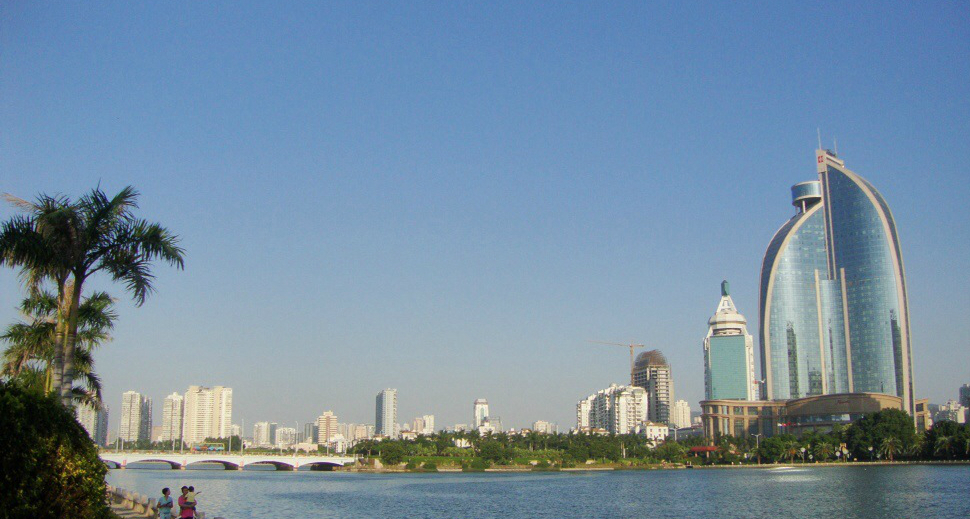
Yundang Lake.
Yundang Lake.

In the height of summer — many, many months ago, I can barely recall — boyfriend and I were on the way to Sanlitun when a woman stopped us and asked if we had five minutes to fill out a survey for foreigners. Boyfriend was about to decline and walk on, but I made him do it. Then I was asked to fill one out too! It was about tourism in Xiamen, and it took longer than five minutes to fill out. But we were told we’d get a chance to win a three-day, all-expenses-paid trip to Xiamen. Xiamen is a coastal city on China’s southeastern coast, within cannon distance of Taiwan, and branded China’s most livable city. It has been on my list of places to go ever since I came to China, so the survey seemed like a great opportunity! I was determined to win the prize.

And I did! Winning turned out to be a lot easier than being picked from hundreds of people at random. The all-expenses-paid trip was actually a guided tour (what else in China?) that included 10 other foreigners. I can’t complain, though, because everyone was really friendly and laid back and Xiamen really was a nice place. And tours are certainly convenient; it was nice not having to plan everything, from lodging to transport to where to go, when you only have three short days.

Continue reading

That time I saw Taboo in Beijing

I went to Elements, a club on the west side of the Worker’s Stadium (where all the clubs are), on Friday night. A friend wanted to see Taboo of the Black Eyed Peas, who was doing a DJ gig there. I had never heard of him, but clubbing after a long six-day week sounded fun. The promo promised a “once of a lifetime” experience. Here he is:

Shut it down.
Shut it down.

And you guys, I touched him. On the shoe.

Holiday fun: Ice cream sandwiches

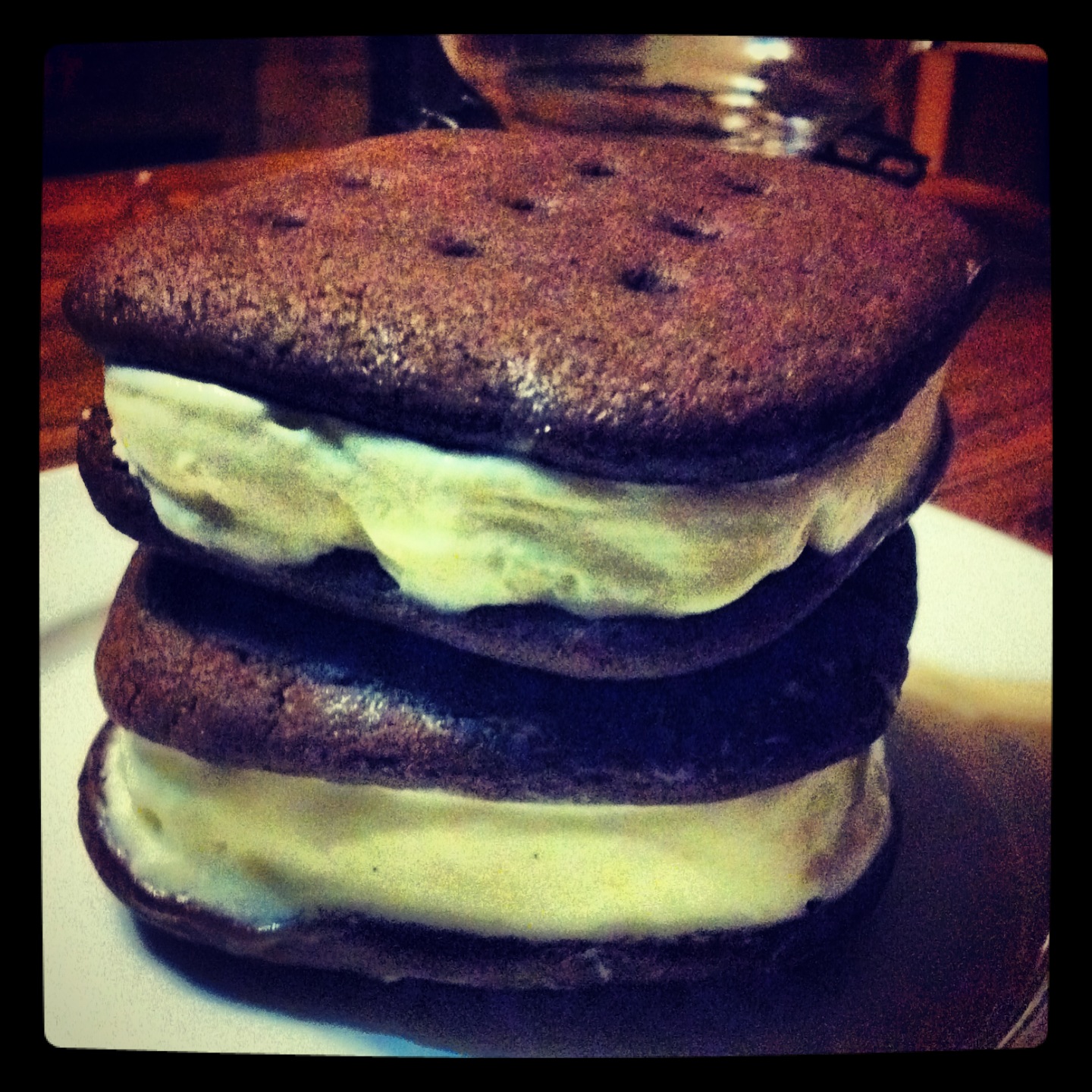
We got a day off for Mid-Autumn Festival, and as usual, the holiday was combined with the closest weekend so that workers would get three days off in a row (only to have to work for the next six). I took advantage of the extra day to try my hand at making ice cream sandwiches, something that is missing in Beijing.* As ice cream sandwiches are my absolute favorite (along with regular ice cream, egg tarts, 芒果椰汁黑糯米甜甜, and banana pudding), I decided that it was once again up to me to satisfy my craving. I would never have gotten the idea, though, if I hadn’t gone to Anthropologie when I went home in May and seen this book. Since then, I’ve thought about buying the book, ordered the book, waited for the book, got the book, and waited for some time to try out the book. That brings me to now, when I’ve managed to make the cookies, the ice cream, and put them altogether:

Back together with my ice cream sandwiches!

They were so fun to make! It took a lot of time because everything has to be cooked and chilled, but look how cool they turned out! The cookies are much more cookie-like than with store-bought sandwiches and too sweet for my liking, but I can’t wait to make another batch.

* You can’t even buy them in Western supermarkets. There is only Haagen-Dazs Crispy Sandwich Ice Cream, which, if you’re American, is not a real ice cream sandwich. There is actually one restaurant that has a peanut butter ice cream sandwich, but I don’t like peanut butter, so I can’t really count it.

Going West: Hiking in Gansu

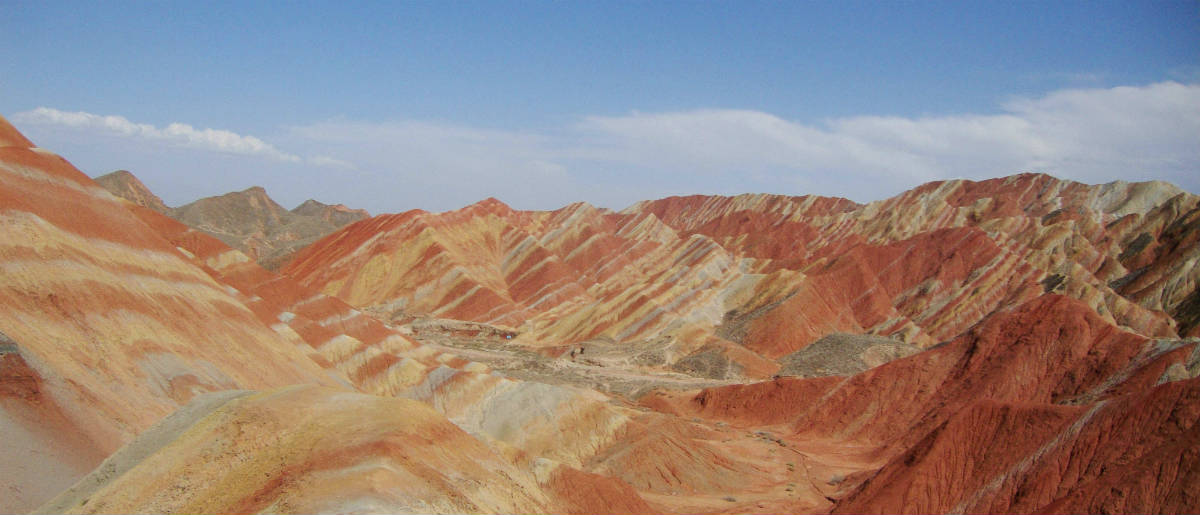
As I briefly mentioned before, I went to Gansu in May. It took me a few times to write this post, but I’ve finally finished it, and I’ve even dug up some pictures to go along with it. Happy reading!

When my sister told me she was coming to see me for three weeks in May, I jumped at the chance to organize a trip. Because who wants to stay in Beijing for three whole weeks? Not I. A few years ago, I had come across some pictures of this mysterious landform known as danxia (丹霞地貌), a rainbow-colored range of sandstone mini-mountains that ripple across a desert plain in Gansu. Since then I began seeing it mentioned more and more. I didn’t know much about it, but I was sure I wanted to go. It looked vast, empty, colorful and breathtaking. So I mentioned Gansu to my sister and boyfriend as a possible hiking excursion (I really love hiking!), but secretly I had already decided that that was where we were going to go.

Continue reading

Weekday fun: Basil muffins

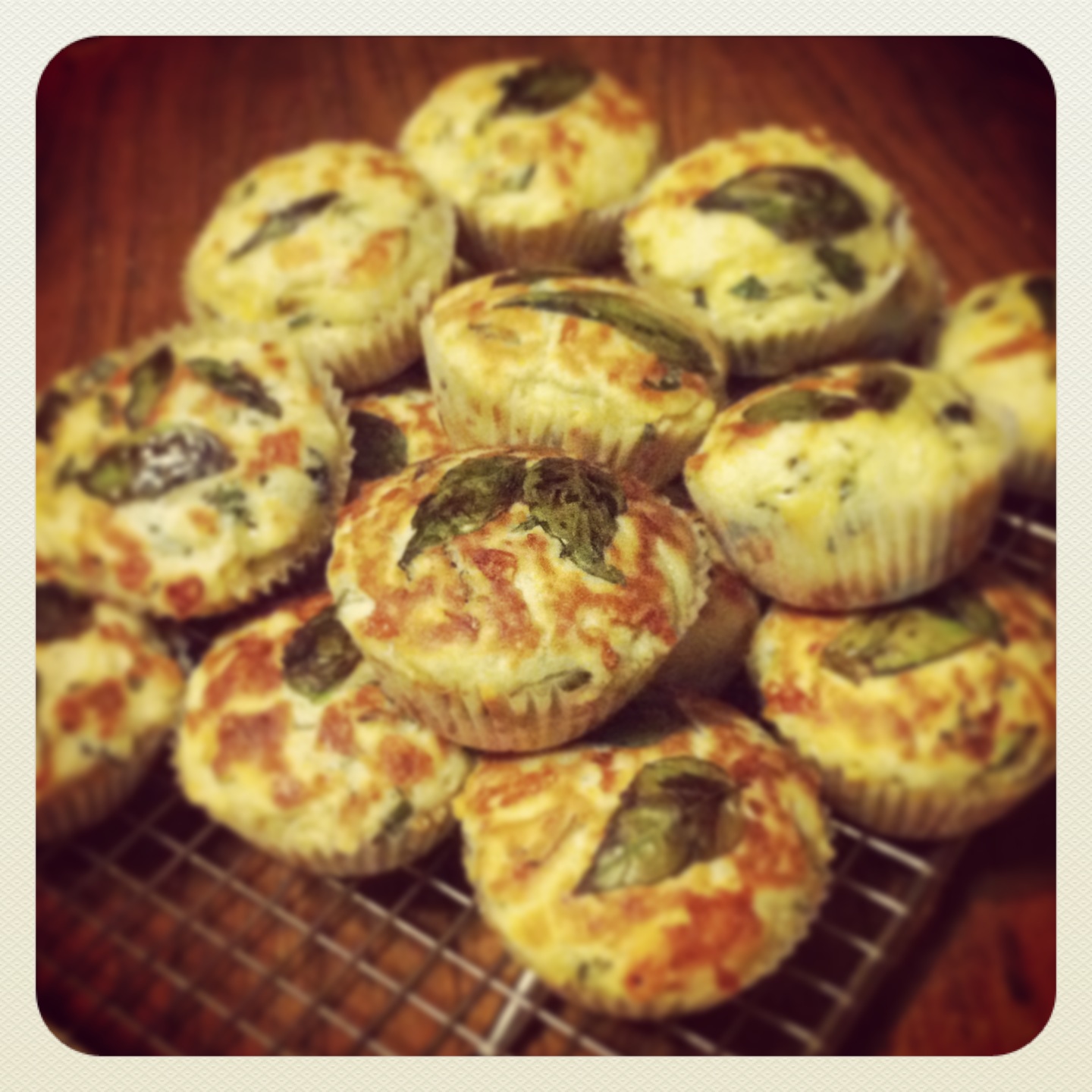
Basil muffins
I had some basil leftover from a roast chicken dinner the other night. I didn’t want to waste it, so I thought I’d make them into muffins. I recently had a memory of these cheddar and leek scones I made once, and I got this craving for some savory muffins. After googling “basil muffins” and finding out that they do exist, I set about making them. I used the first three Google results as a guide — luckily all I needed was some more basil and cheese. I debated adding olives, but I thought I’d just stick to olive oil and let the basil stand on its own. I used half all-purpose and half whole wheat flour, and they turned out just the right balance of airy and dense. The muffins live up to their name as well: Basil means “fragrant leaf” in Chinese (香叶, xiang ye), and these muffins really are fragrant. I would know because I brought some to work today, and the container they were in smells so delicious.

A Chinese takeout in China!

Mom-and-pop restaurants are a-plenty in China — straight-up dives whose only characteristics are cheap and dirty. A lot of times they don’t even have real names, their signs simply stating 成都小吃 (Chengdu xiaochi, Chengdu small eats) or 家常菜 (jia chang cai, home-style food). They serve more or less the same food — staple cold dishes, standard meat and vegetable stir-fries, stir-fried noodles, fried rice. They serve what their names imply (except in the case of Chengdu xiaochi, which don’t actually serve authentic snacks from Chengdu, but just generic quick dishes that have become ubiquitous all across China).

If it helps, just think of Chinese takeouts in the U.S. In fact, I’m pretty sure they are based on these 成都小吃 and 家常菜 places, right down to the stark decor, fluorescent/dull lighting, identical menus and convenience. Plus they are almost always run by immigrants. Of course, the main difference is the food on offer and the takeout containers. Don’t judge me if I say that, sometimes, I crave American-Chinese takeout. Like fried chicken wings and wonton crackers. The stuff my Chinese parents never make and only Chinese takeouts in the U.S. (and maybe other Western countries?) can make. In fact, I’ve often wondered how an American-Chinese takeout joint would fare in China. Would laowais* appreciate greasy comfort fare that isn’t in the form of a burger or pasta or sandwich, but is instead a bastardized version of the cuisine of the very country in which they live?

I can’t speak for others, but I probably would! And finally a place in Shanghai has opened to answer my question. I’m not sure about their concept of an upscale Chinese takeout that isn’t a takeout or cheap, but beggars can’t be choosers. I’m just glad it’s not in Beijing, which would make it hard to fight my craving for an American-style fried egg roll. Those things are awful. But I still want one (two).

* Obviously, the Chinese would hate it.

Korea, observed

So I made it to Korea and back. Since I was not even there for 48 hours, I don’t feel qualified to make an in-depth analysis. But below are some observations:

  • The Internet really is super fast, which is indicative of how technologically savvy they are. Everyone on the subway seemed to have a Samsung Galaxy, or to a lesser extent, an iPhone. There were two desktops in our hotel room.
  • If you look closely at people, they start to look the same. I don’t mean this in a racist way. The women have the same eye shape, the same trace of double eyelid, the same makeup style. And the skin on their faces! They range from powdery pale to a pasty Kabuki white, but none of them had a healthy glow. It was kind of unsettling.
  • Then there are the conglomerates, Lotte and Samsung. They were like BnL in Wall-E. Lotte has department stores everywhere, and its snacks make up most of the 7-Elevens. Samsung phones are everywhere, and they are even branching out into fashion. There was a Samsung Galaxy store that wasn’t selling phones, but clothes for men and women. Samsung also has a clothing brand called 8ight Seconds. And these are only the parts of the company that the average consumer will notice. I began to understand why David Mitchell chose to make Korea the basis for his futuristic, corporatist dystopia in Cloud Atlas.
  • Korean food in Korea is not much different from all the other Korean food I’ve had. Even though I’m not a fan, I wanted to eat it while I was in Korea — to give it a chance, to see if there was anything I was missing out on, to like it. I tried, but I just can’t. It seems they cover every dish with a load of sauce, and they really like to use that really red, spicy-looking-but-not-spicy sauce, and they always have kimchi and pickled radish. If it’s not pickled, it’s got some sort of gooky mayonnaise-like sauce drizzled over it. I did like their giant dumplings, though. And jeon is not bad.
  • I thought that since Korean shared the same writing system with Chinese once upon a time, I could try to make some links between the two languages. Sometimes I did notice similar individual words — for instance, mountain is “shan” in Chinese and “san” in Korean. But how does “ni hao” become “annyeong haseyo” or “xie xie” “go ma sseum ni da“? The weirdest part was that I thought I could understand some snippets of what was said because it sounded like Chinese, but I wasn’t sure if it was in fact Chinese or if it just sounded similar.

I hope the list doesn’t sound too negative because I really did enjoy the trip. It was very interesting to see very noticeable differences between China and Korea, especially since they tend to blur together in the West. Koreans definitely struck me as very pleasant, well-adjusted people. Considering that in the past century, they have been bullied by Japan, had Western powers meddle around with it, and been torn apart by a civil war, they seem to have moved past it all to concentrate on the present and future (unlike this certain other Asian country, ahem). They have embraced many “Western” ideas, such as doughnuts, ice cream, baseball, and pubs, but they also hold onto their traditions well. At least in terms of businesses, there is a good mix of foreign and domestic, and Koreans on average don’t seem to prefer one over the other. On first glance, Korea seems have found a good balance, which China hasn’t been able to get right.

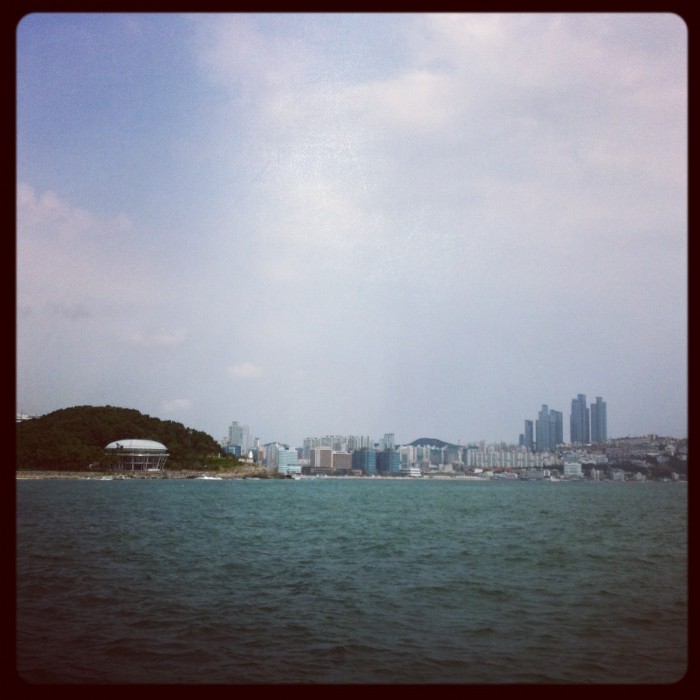
Photo: Haeundae Beach from a boat.